EN
EN
 AR
AR
 BG
BG
 HR
HR
 CS
CS
 DA
DA
 FR
FR
 DE
DE
 EL
EL
 HI
HI
 PL
PL
 PT
PT
 RU
RU
 ES
ES
 CA
CA
 TL
TL
 ID
ID
 SR
SR
 SK
SK
 SL
SL
 UK
UK
 VI
VI
 ET
ET
 HU
HU
 TH
TH
 MS
MS
 SW
SW
 GA
GA
 CY
CY
 HY
HY
 AZ
AZ
 UR
UR
 BN
BN
 LO
LO
 MN
MN
 NE
NE
 MY
MY
 KK
KK
 UZ
UZ
 KY
KY


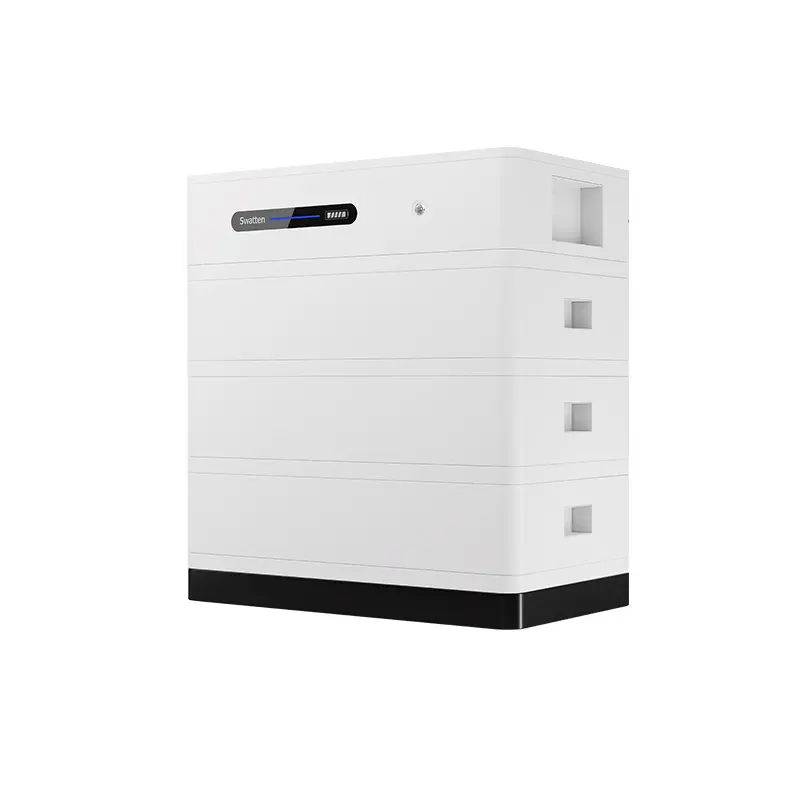
Photovoltaic power generation has become one of the most widely deployed renewable energy sources across commercial and industrial sectors. Yet anyone who has managed a solar installation knows the fundamental limitation: the sun does not shine on command. A bess — short for Battery Energy Storage System — changes that equation, turning an intermittent power source into a dispatchable, reliable asset. Getting the match right between PV arrays and battery storage, however, takes more than bolting a battery cabinet next to an inverter. The sizing, architecture, and operational strategy all determine whether the system delivers on its promise or underperforms.
Understanding the Core Challenge: Why PV Systems Need BESS
The Intermittency Problem Every Solar Project Faces
Solar irradiance fluctuates by the minute. A passing cloud can slash output by 40% in seconds. Seasonal shifts mean winter generation in many regions drops to a third of summer peaks. For grid-connected facilities, this intermittency creates two headaches: voltage instability at the point of interconnection and unpredictable net energy exports that grid operators increasingly penalize through curtailment or unfavorable feed-in tariff structures. A bess addresses both issues by absorbing excess generation and releasing it when the solar resource dips, effectively decoupling generation from real-time consumption.
Without storage, every kilowatt-hour generated must be consumed or exported the instant it is produced. That hard constraint caps the practical penetration of solar in any given facility. A factory running a 1 MW daytime load with a 2 MW rooftop array ends up exporting half its generation at wholesale rates — and then buying back power at retail rates after sunset. That mismatch erodes the financial case for oversizing the array, even when roof space and capital are available.
What Happens When Generation Outpaces Demand
The so-called "duck curve" — first observed in California but now visible in markets from Germany to Australia — illustrates exactly this problem. Midday solar generation floods the grid, depressing wholesale prices. By early evening, when commercial loads peak and residential demand spikes, solar output has already tapered off. The result is a steep ramp that grid operators must cover with fast-responding fossil fuel plants.
For a typical commercial user, the economic hit is concrete. A cold storage facility in Southeast Asia recorded midday export prices as low as 0.15/kWh for evening import. The plant's 800 kWp PV system was technically performing well — but financially, it was leaking value every afternoon. A properly sized bess closes that gap by time-shifting generation from low-value hours to high-value hours.
Technical Foundations: How BESS and PV Systems Work Together
AC-Coupled vs. DC-Coupled — Choosing the Right Architecture
The coupling architecture defines how the battery connects to the solar array and the grid, and it has a direct impact on system efficiency, retrofit feasibility, and total installed cost.
In an AC-coupled configuration, the PV array and the battery each have their own inverter. Solar DC power is converted to AC by the PV inverter; the battery charges by drawing AC from the same bus and converting it back to DC through a separate power conversion system (PCS). The benefit is modularity — an AC-coupled bess can be added to an existing solar installation without touching the PV inverter. The trade-off is efficiency: each round trip through the battery involves two additional conversion stages, and system-level round-trip efficiency typically lands between 82% and 88%.
A DC-coupled architecture puts the PV array and the battery on a shared DC bus behind a single hybrid inverter. Solar power flows directly into the battery without an extra AC-DC conversion step. This eliminates one layer of power electronics and pushes round-trip efficiency into the 90–95% range. DC coupling also enables "clipping recapture" — when the PV array generates more DC power than the inverter's AC rating, the excess can charge the battery instead of being lost. For new-build projects where the PV and storage are designed together, DC coupling often delivers the better lifetime economics. For retrofits or sites where the solar inverters are already in place, AC coupling remains the practical choice.
Sizing Logic — Matching BESS Capacity to PV Output
Sizing a battery storage system is not a one-size-fits-all exercise. Three variables drive the calculation: the facility's load profile, the PV array's generation curve, and the economic objective — whether that is peak shaving, self-consumption maximization, backup power, or grid services revenue.
The starting point is a granular load analysis. Hourly or 15-minute interval data over at least a full year captures seasonal variation and weekend-versus-weekday patterns. With that data in hand, the designer overlays the PV generation forecast — modeled from irradiance data for the site's latitude and orientation — and identifies the periods where excess generation is available for charging and where stored energy can displace the highest-cost grid imports.
Two key parameters define the bess: power capacity (rated in MW or kW) and energy capacity (rated in MWh or kWh). A common mistake is to size energy capacity without considering power capacity. A 4 MWh battery with a 500 kW PCS cannot discharge fast enough to cover a 1 MW peak, rendering much of its stored energy unusable for peak shaving. The power-to-energy ratio — sometimes called the C-rate — should match the application. For solar self-consumption shifting, a ratio of 0.25C to 0.5C (meaning a 4-hour to 2-hour discharge duration) is typical. For frequency regulation or rapid-response ancillary services, higher C-rates are required.
Depth of discharge (DoD) and state of charge (SOC) management also play into sizing. Lithium iron phosphate (LFP) cells — now dominant in stationary storage — can routinely operate at 80–90% DoD, but designing for 80% DoD extends cycle life meaningfully. A 4 MWh nameplate system operated at 80% DoD delivers 3.2 MWh of usable energy, and that usable figure — not the nameplate — is what the load analysis must reference.
Real-World Application: A Manufacturing Facility's Energy Transformation
Case Background and Operational Pain Points
A food processing plant in the Middle East — running refrigeration, mixing, and packaging lines across two shifts — faced a combination of rising electricity costs and unreliable grid supply. The facility had installed a 2 MWp rooftop PV system two years earlier, but grid instability meant frequent voltage sags that tripped production equipment. Diesel generators ran an average of 400 hours per year as backup, burning expensive fuel and adding maintenance overhead. The solar array was generating roughly 3,200 MWh annually, but nearly 40% was exported to the grid at low feed-in rates because daytime production loads could not absorb the midday peak.
System Design and Integration Approach
The engineering team opted for a 2 MW / 4 MWh DC-coupled lithium iron phosphate bess, connected on the DC side of the existing PV array through a shared 2.5 MW hybrid inverter. The DC coupling choice was driven by two factors: the solar panels and the battery could share a single inverter, reducing balance-of-system costs; and the clipping losses from the oversized DC array — roughly 8% of annual generation — could now be captured and stored.
An energy management system (EMS) was programmed with a time-of-use schedule aligned with the local utility tariff. During the morning ramp, the battery charges from surplus solar. At midday, when PV output peaks and internal loads are stable, the EMS directs excess DC power into the battery. From 17:00 to 21:00 — the utility's peak pricing window — the battery discharges to cover 100% of facility load, eliminating grid imports during the most expensive hours. The EMS also monitors grid voltage at the point of interconnection; if voltage sags below a programmable threshold, the hybrid inverter instantly island's the facility and the bess picks up the full load within milliseconds, faster than a diesel generator can start.
Measurable Outcomes After Deployment
Twelve months of operational data showed concrete results. Diesel generator runtime dropped from 400 hours to under 30 hours per year — a 92% reduction. Grid electricity purchases fell by 34%, and the plant's self-consumption ratio for solar jumped from 60% to 91%. The avoided diesel fuel cost alone saved approximately 112,000 against a system cost of $680,000 — yielding a simple payback period of just over six years, with the LFP cells warrantied for 6,000 cycles at 80% DoD, equivalent to well over a decade of daily cycling.
Key Considerations Before Investing in a PV-BESS System
Safety Standards and Regulatory Compliance
Battery storage carries inherent risks — thermal runaway, toxic gas release, and electrical arc flash among them — which is why a robust regulatory framework exists. NFPA 855, the Standard for the Installation of Stationary Energy Storage Systems, sets requirements for spacing, ventilation, fire suppression, and explosion control. The 2026 edition expands hazard mitigation analysis requirements and mandates explosion prevention systems compliant with NFPA 69 for most indoor installations. On the international side, IEC 62933 covers system-level safety for grid-integrated electrical energy storage, while UL 9540 governs the safety of complete energy storage systems and UL 9540A specifically addresses thermal runaway fire propagation testing at the cell, module, and unit level.
Procurement teams should verify that any bess under consideration carries current certifications to these standards. Beyond documentation, site-level factors matter: clearance distances from occupied buildings, access for first responders, gas detection and ventilation design, and integration with the facility's existing fire alarm and suppression infrastructure. A compliant installation is not just a paperwork exercise — it directly affects insurability and operational continuity.
How to Evaluate a BESS for Long-Term Performance
Battery cells degrade. The question is how fast, and under what conditions. Key evaluation criteria start with cycle life at a specified DoD and ambient temperature. LFP cells commonly deliver 4,000 to 8,000 cycles at 80% DoD and 25°C, but elevated ambient temperatures — common in Middle Eastern, South Asian, and African installations — accelerate degradation. For outdoor installations in hot climates, liquid cooling adds upfront cost but extends calendar life substantially compared to forced-air cooling.
The battery management system (BMS) is the brain of the system and deserves scrutiny. A capable BMS performs cell-level voltage and temperature monitoring, active balancing, and state-of-health tracking over time. The EMS layer above it should offer programmable charge/discharge schedules, tariff integration, and demand forecasting. Connectivity matters too: remote monitoring and over-the-air firmware updates reduce the need for on-site service visits and help catch minor issues before they become failures.
Finally, look beyond the technical spec sheet to the supplier's track record. How many systems of similar scale are operating in the field? What is the local service capability? Are spare parts stocked regionally? A bess is a 10-to-15-year asset; the supplier relationship needs to last that long.
Frequently Asked Questions
What is a BESS and how does it work with solar panels?
A Battery Energy Storage System absorbs surplus DC or AC power from a PV array, stores it in electrochemical cells, and discharges it when needed — at night, during peak pricing windows, or during grid outages. The system includes battery modules, a power conversion system, a battery management system, and thermal management components.
How to determine the right size of BESS for a solar system?
Start with a detailed load profile analysis using interval data across a full year. Identify the gap between PV generation and facility load, define the primary objective (self-consumption, peak shaving, or backup), and size both power capacity and energy capacity accordingly. Engaging an engineering firm for a front-end engineering design study reduces the risk of oversizing or undersizing.
What is the difference between AC-coupled and DC-coupled BESS?
AC-coupled systems use separate inverters for the PV array and the battery, connecting on the AC side. DC-coupled systems share a single inverter and a common DC bus. DC coupling offers higher round-trip efficiency (90–95%) and clipping recapture but is less flexible for retrofit projects. AC coupling is modular and easier to add to existing solar installations.
How long does a BESS typically last in a PV system?
LFP-based systems routinely achieve 10 to 15 years of service life under daily cycling at 80% depth of discharge. Actual lifespan depends on operating temperature, cycling frequency, and average state of charge. Liquid-cooled systems in hot climates tend to outlast air-cooled equivalents.
Can a BESS operate during a grid outage?
Yes — provided the system includes islanding capability and a transfer switch that disconnects from the grid during an outage. Not all systems include this feature by default, so it must be specified during the design phase. Backup duration depends on the battery's energy capacity relative to the critical load.
What safety risks require attention when installing a BESS?
The primary risks are thermal runaway, electrical arc flash, and toxic off-gassing. Compliance with NFPA 855, UL 9540A testing, and local fire codes is essential. Site-level precautions include adequate ventilation, gas detection, clearance from occupied buildings, and coordination with local fire services.
How much can a BESS reduce my electricity costs?
Savings vary by tariff structure and solar resource, but typical commercial installations reduce grid electricity purchases by 25–40%. Facilities with high demand charges and time-of-use tariffs see the fastest payback. A well-sized system in a favorable tariff environment can achieve payback in five to seven years.
Which battery chemistry is best for commercial PV-BESS projects?
Lithium iron phosphate (LFP) is the dominant chemistry for stationary commercial storage due to its thermal stability, long cycle life, and declining cost. Nickel-manganese-cobalt (NMC) offers higher energy density but carries greater thermal runaway risk. For most C&I applications, LFP provides the best balance of safety, longevity, and total cost of ownership.
Choosing a Reliable Storage Solution Partner
A PV-BESS project is a long-term commitment — typically spanning a decade or more of daily operation. The hardware matters, but the engineering behind the hardware matters just as much. SINOTECH brings cross-sector project experience across high-voltage transmission, medium and low-voltage distribution, and new energy storage, with a track record of delivering integrated electrical solutions to power customers worldwide.
The company's approach to energy storage emphasizes application-specific system design rather than off-the-shelf products. For each project, the engineering team evaluates the local grid environment, load characteristics, solar resource, and regulatory requirements before proposing an architecture — whether AC-coupled, DC-coupled, or a hybrid configuration. Manufacturing capabilities span lithium battery systems, flow batteries, and hybrid storage platforms, supported by a global supply chain that ensures consistent component availability and competitive lead times.
Quality management processes align with international standards including ISO 9001, and all storage systems are designed for compliance with NFPA 855, IEC 62933, and UL 9540 where project requirements demand it. From feasibility studies and preliminary engineering design through commissioning and after-sales technical support, the service model is built around the full project lifecycle — because a bess is not a one-time purchase but an operational asset that needs sustained engineering backing.
For procurement professionals evaluating storage integration partners, the key questions are straightforward: Does the supplier understand the local grid code? Can the system be customized to the specific load and tariff profile? Is local service support available? SINOTECH's established partnerships with tier-one equipment manufacturers and its in-house engineering resources position the company to answer those questions with hardware, documentation, and on-the-ground capability.