EN
EN
 AR
AR
 BG
BG
 HR
HR
 CS
CS
 DA
DA
 FR
FR
 DE
DE
 EL
EL
 HI
HI
 PL
PL
 PT
PT
 RU
RU
 ES
ES
 CA
CA
 TL
TL
 ID
ID
 SR
SR
 SK
SK
 SL
SL
 UK
UK
 VI
VI
 ET
ET
 HU
HU
 TH
TH
 MS
MS
 SW
SW
 GA
GA
 CY
CY
 HY
HY
 AZ
AZ
 UR
UR
 BN
BN
 LO
LO
 MN
MN
 NE
NE
 MY
MY
 KK
KK
 UZ
UZ
 KY
KY


Understanding Peak Shaving and Urban Grid Stress
Urban power grids face a fundamental mismatch between supply and demand. Electricity consumption spikes during morning and evening hours when commercial buildings, transit systems, and residential users draw power simultaneously. The gap between baseline load and these peak demands forces utilities to maintain spinning reserve capacity — power plants running at partial output, burning fuel while waiting for demand surges that may or may not materialize.
Peak shaving addresses this inefficiency by reducing the maximum power drawn from the grid during high-demand periods. Instead of ramping up generation, utilities or large consumers deploy stored energy to cover the difference. The economic case for peak shaving grows stronger as time-of-use electricity pricing becomes standard in metropolitan markets, where peak rates can exceed off-peak rates by a factor of three or more.
BESS — Battery Energy Storage Systems — has emerged as the dominant technology for this application. Unlike traditional pumped hydro storage requiring specific geography, or flywheel systems limited to short-duration bursts, battery storage scales from commercial building applications to utility-scale installations serving entire urban districts.
How BESS Performs Peak Shaving in Urban Environments
Charge-Discharge Cycling Logic
A bess installation connected to an urban substation charges during off-peak hours — typically between midnight and 6 AM when baseload generation exceeds demand. The stored energy dispatches back to the grid during the morning peak (7–10 AM) and evening peak (5–9 PM), flattening the net load curve that the upstream transmission network must handle.
Lithium iron phosphate (LiFePO4) batteries dominate urban BESS deployments for several reasons. Their thermal stability reduces fire risk in densely populated areas where a thermal runaway event carries unacceptable consequences. Cycle life exceeding 6,000 charge-discharge cycles at 80% depth of discharge means a system installed today remains economically productive for 15–20 years of daily peak shaving operation.
A municipal utility in Southeast Asia deployed a 20MW/40MWh BESS at a congested urban substation where physical space constraints prevented adding a third transformer. The battery system absorbed the 15MW afternoon air-conditioning peak, deferring approximately $12 million in substation upgrade capital expenditure by an estimated seven years.
Integration With Existing Substation Infrastructure
Urban BESS installations typically connect at the medium-voltage level (10–35kV) through step-up transformers integrated into the battery container or installed adjacent to it. The power conversion system (PCS) manages bidirectional power flow, switching from rectification during charging to inversion during discharge within milliseconds of receiving a grid dispatch signal.
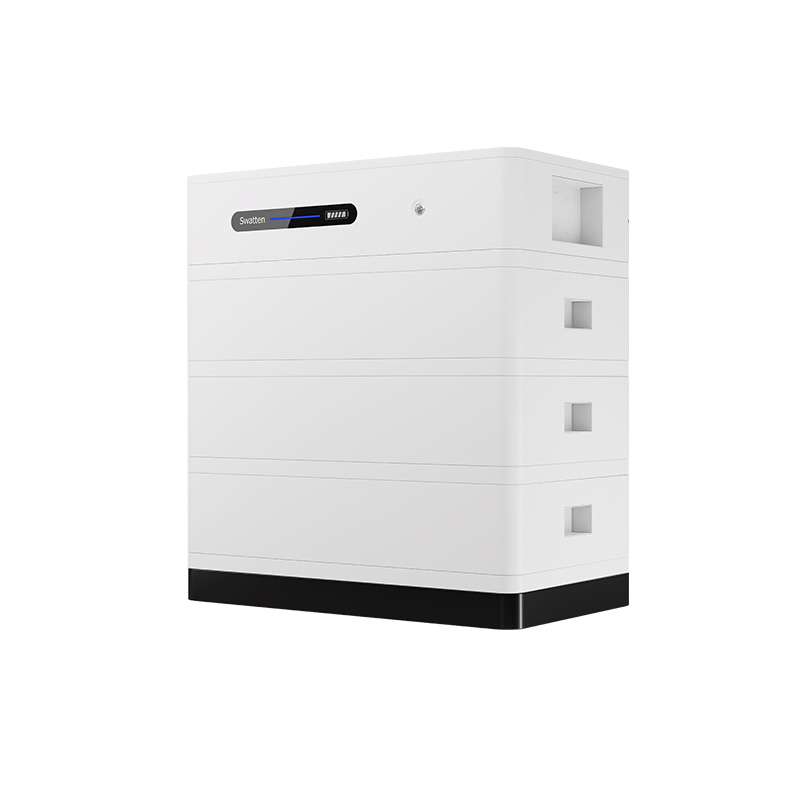
Rack-mounting BESS configurations suit indoor substation deployments where floor space is limited. Stackable BESS designs allow utilities to scale capacity incrementally — starting with a 5MWh container and adding units as demand patterns evolve. This modular approach reduces upfront capital commitment compared to building a dedicated BESS facility.
Technical Requirements for Urban BESS Deployment
Space and Safety Considerations
Urban substations rarely have vacant land for large-scale battery installations. Containerized BESS solutions address this by prefabricating the entire system — batteries, PCS, thermal management, and fire suppression — into standard shipping container form factors deployable on existing substation concrete pads.
Fire safety protocols demand multi-layer protection: cell-level monitoring detecting voltage anomalies before thermal runaway initiates, module-level gas detection triggering ventilation before flammable electrolyte vapor accumulates, and container-level aerosol suppression systems activating automatically. NFPA 855 provides the installation standard for energy storage systems, specifying separation distances and ventilation requirements that urban deployments must satisfy given their proximity to occupied buildings.
Grid Interconnection Standards
IEEE 1547 governs the interconnection of distributed energy resources including BESS with the grid. Urban deployments must demonstrate ride-through capability — remaining connected during brief voltage sags rather than disconnecting, which would worsen grid instability during the very peak events the system was designed to mitigate. The PCS must synchronize with grid frequency within ±0.5 Hz and respond to utility dispatch signals through SCADA integration.
Frequently Asked Questions
What size BESS is needed for urban peak shaving?
Commercial building applications typically require 500kWh–2MWh to shave a facility-level peak. Distribution substation-level peak shaving demands 10–50MWh depending on feeder load profiles. Utility-scale urban deployments range from 100MWh upward. Sizing depends on peak demand magnitude, duration, and target reduction percentage rather than any fixed formula.
How long can a BESS sustain peak shaving discharge?
Most urban peak shaving systems target 2–4 hours of continuous discharge at rated power. This covers the typical morning or evening peak window. Longer-duration systems (6–8 hours) exist but carry higher per-kWh costs that rarely justify the additional capacity for peak shaving alone, though they add value through ancillary services like frequency regulation.
Does BESS peak shaving work with renewable energy integration?
Yes. Pairing BESS with rooftop solar or urban wind generation creates a hybrid system where excess renewable generation during midday charges the battery for evening peak discharge. This addresses the "duck curve" problem where solar production drops precisely as evening demand rises. Suppliers like Liaoning Sinotech Group provide integrated BESS and solar solutions for this application.
What is the difference between rack-mounting and stackable BESS?
Rack-mounting BESS fits into standard 19-inch server racks for indoor installations with controlled environments. Stackable BESS uses weatherproof outdoor cabinets that interconnect electrically and communicate through a central controller. Rack-mounting suits substation control buildings; stackable suits outdoor pad-mounted deployment where indoor space is unavailable.
How does BESS peak shaving reduce electricity costs?
Commercial and industrial users on time-of-use tariffs avoid demand charges by drawing from the BESS during peak pricing windows. Demand charges — based on the highest 15-minute consumption interval each month — can represent 30–70% of a facility's total electricity bill. Peak shaving eliminates or reduces these charges without reducing actual energy consumption.
What maintenance does an urban BESS installation require?
Quarterly thermal management system inspection, semi-annual capacity testing, and continuous remote monitoring through the battery management system. LiFePO4 chemistry requires no electrolyte replenishment unlike lead-acid alternatives. Cell balancing occurs automatically through the BMS during partial-state-of-charge operation typical of peak shaving duty cycles.