EN
EN
 AR
AR
 BG
BG
 HR
HR
 CS
CS
 DA
DA
 FR
FR
 DE
DE
 EL
EL
 HI
HI
 PL
PL
 PT
PT
 RU
RU
 ES
ES
 CA
CA
 TL
TL
 ID
ID
 SR
SR
 SK
SK
 SL
SL
 UK
UK
 VI
VI
 ET
ET
 HU
HU
 TH
TH
 MS
MS
 SW
SW
 GA
GA
 CY
CY
 HY
HY
 AZ
AZ
 UR
UR
 BN
BN
 LO
LO
 MN
MN
 NE
NE
 MY
MY
 KK
KK
 UZ
UZ
 KY
KY


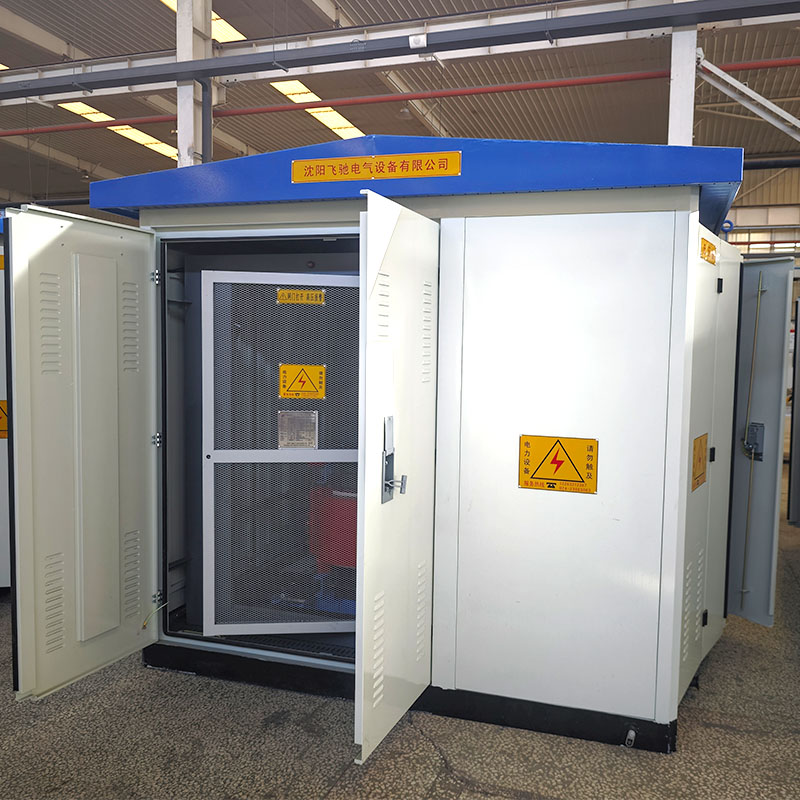
Adopt Substation Automation for Real-Time Monitoring and Control
Intelligent Electronic Devices (IEDs) and Integrated Control Systems
Intelligent Electronic Devices (IEDs) form the backbone of modern substation automation. These digital relays and controllers monitor voltage, current, power quality, and other key parameters—and execute protective actions autonomously. When paired with programmable logic controllers (PLCs), IEDs enable faster fault detection and selective isolation: during a short circuit, for instance, only the affected circuit breaker trips, preserving service to the rest of the network. This precision minimizes outage duration, reduces equipment stress, and supports a shift from reactive to proactive grid management.
Integrated control systems extend this capability by enabling remote operations—such as adjusting transformer tap changers or operating disconnect switches—from centralized locations. The real-time data collected by IEDs feeds higher-level automation platforms, supporting analytics, event logging, and compliance reporting. As digital substations replace analog infrastructure, reduced wiring complexity and standardized data access further streamline commissioning, diagnostics, and maintenance. For utilities aiming to improve reliability, reduce downtime, and extend asset life, IEDs are no longer optional—they’re foundational.
SCADA Integration and Remote Operations for Centralized Substation Management
Supervisory Control and Data Acquisition (SCADA) systems serve as the central nervous system for modern substation fleets. By aggregating real-time telemetry—load profiles, voltage levels, breaker status, and equipment health metrics—SCADA provides operators with a unified, remote view across geographically dispersed sites. This eliminates routine on-site inspections and accelerates response to anomalies: operators can open or close breakers, adjust voltage regulators, or isolate faults instantly from the control center.
When integrated with IoT sensors and robust communication networks (e.g., fiber-optic, LTE, or secure RF), SCADA captures granular health data—including transformer oil temperature, dissolved gas analysis, and moisture content—enabling early detection of incipient failures. These insights feed predictive analytics, helping maintenance teams prioritize interventions based on actual risk—not calendar dates. Crucially, SCADA integration with existing protection schemes ensures operational continuity and regulatory compliance, while its role in reducing labor costs and cutting outage restoration time remains unmatched.
IEC 61850-Based Grid Automation and Self-Healing Substation Capabilities
The IEC 61850 standard is the cornerstone of interoperable, future-ready substation automation. By unifying communication protocols across devices—regardless of manufacturer—it eliminates proprietary silos, cuts engineering effort during upgrades, and simplifies system expansion. In self-healing configurations, IEC 61850 enables real-time device-to-device messaging over high-speed fiber-optic networks. When a fault occurs, protective relays coordinate peer-to-peer to reconfigure power flow automatically—restoring supply to unaffected sections within milliseconds. This limits blackout scope and duration without relying on centralized decision-making.
Beyond speed and resilience, IEC 61850’s object-oriented modeling and standardized data naming support seamless integration with AI-driven analytics platforms. Its vendor-neutral architecture ensures scalability and long-term adaptability—making it the de facto foundation for smart grid evolution. Utilities adopting IEC 61850 report fewer catastrophic failures, lower operational overhead, and smoother transitions to advanced automation functions.
Apply Predictive and Condition-Based Maintenance Across Substation Assets
Predictive and condition-based maintenance (CBM) shift substation operations from calendar-driven interventions to data-informed, just-in-time actions. By leveraging real-time asset health data, these strategies reduce unplanned outages, extend equipment life, and optimize lifecycle costs.
Reducing Unplanned Outages and Extending Equipment Lifespan in Substations
Time-based maintenance often leads to premature replacements—or worse, missed degradation signals. Predictive maintenance uses continuous condition monitoring (e.g., thermal imaging, partial discharge, vibration, and oil analysis) to forecast failure likelihood and schedule interventions before breakdowns occur. Condition-based maintenance complements this by triggering work only when sensor-derived indicators—such as winding temperature rise or gas-in-oil concentration—cross validated thresholds. Together, they eliminate unnecessary servicing while preventing cascading damage. Industry benchmarks show these approaches can improve equipment reliability by up to 40% and reduce overall maintenance spend by 25–30%, directly extending the service life of transformers, circuit breakers, and bushings.
AI-Driven Analytics, IoT Sensors, and Cloud Platforms for Substation Health Monitoring
IoT sensors deployed across critical assets—on transformers, GIS enclosures, and surge arresters—deliver high-frequency, multi-dimensional data to cloud-based analytics platforms. There, AI and machine learning models correlate live readings with historical failure patterns, environmental conditions, and operational context to detect subtle anomalies and model deterioration trends. Operators receive actionable alerts—not raw data—pinpointing probable root causes and recommending optimal maintenance windows. Centralized dashboards provide a holistic, cross-substation view of asset health, enabling resource prioritization and performance benchmarking. This intelligence replaces subjective judgment and periodic sampling with objective, scalable, and continuously improving decision support—strengthening grid resilience and power delivery assurance.
Enhance Load Management and Power Quality in Modern Substations
Smart Equipment Upgrades for Adaptive Load Handling in Digital Substations
Modern load volatility demands adaptive infrastructure—not static hardware. Digital substations deploy smart transformers, switchgear, and circuit breakers equipped with embedded sensors and bidirectional communication. These devices dynamically adjust to changing demand: intelligent on-load tap changers regulate voltage in real time; solid-state switchgear enables microsecond-level fault interruption; and digital reclosers optimize sectionalizing based on load flow. Such responsiveness mitigates overload risks, reduces line losses, and defers costly capacity upgrades. By replacing legacy electromechanical assets with intelligent alternatives, utilities gain a more agile, efficient, and future-proof grid—one that scales seamlessly with distributed energy resources and electrification growth.
Real-Time Power Quality Monitoring and Mitigation in Smart Substations
Power quality is no longer a secondary concern—it’s a core service metric. Smart substations integrate millisecond-resolution monitoring across all feeders, capturing voltage sags, harmonics, flicker, and frequency excursions continuously. When deviations exceed IEEE 519 or EN 50160 thresholds, mitigation devices—such as active harmonic filters, dynamic capacitor banks, and static VAR compensators—respond autonomously to restore compliance. This closed-loop control prevents equipment malfunction, avoids production losses for industrial customers, and reduces warranty claims. Critically, embedding power quality analytics directly into the substation automation system gives operators full visibility and control—transforming power quality from a reactive troubleshooting task into a proactive, measurable performance indicator.
FAQ
What are Intelligent Electronic Devices (IEDs) in substation automation?
IEDs are digital relays and controllers used in substations to monitor voltage, current, and power quality. They execute protective actions and enable faster fault detection and response, ensuring higher grid reliability.
How does SCADA contribute to modern substation management?
SCADA systems aggregate real-time data from substations, enabling centralized control and monitoring. They reduce on-site inspections, accelerate fault isolation, and integrate predictive analytics for preventive maintenance.
What role does IEC 61850 play in smart substations?
IEC 61850 standardizes communication protocols across devices in substations, ensuring interoperability and enabling self-healing capabilities for rapid fault response.
How does predictive maintenance benefit substation operations?
Predictive maintenance uses real-time asset health data to predict and address equipment issues before failures occur, reducing outages and maintenance costs.
Why is power quality monitoring essential in smart substations?
Real-time power quality monitoring identifies and mitigates issues like voltage sags, harmonics, and flicker, reducing equipment malfunctions and ensuring compliance with service standards.
Table of Contents
- Adopt Substation Automation for Real-Time Monitoring and Control
- Apply Predictive and Condition-Based Maintenance Across Substation Assets
- Enhance Load Management and Power Quality in Modern Substations
-
FAQ
- What are Intelligent Electronic Devices (IEDs) in substation automation?
- How does SCADA contribute to modern substation management?
- What role does IEC 61850 play in smart substations?
- How does predictive maintenance benefit substation operations?
- Why is power quality monitoring essential in smart substations?