EN
EN
 AR
AR
 BG
BG
 HR
HR
 CS
CS
 DA
DA
 FR
FR
 DE
DE
 EL
EL
 HI
HI
 PL
PL
 PT
PT
 RU
RU
 ES
ES
 CA
CA
 TL
TL
 ID
ID
 SR
SR
 SK
SK
 SL
SL
 UK
UK
 VI
VI
 ET
ET
 HU
HU
 TH
TH
 MS
MS
 SW
SW
 GA
GA
 CY
CY
 HY
HY
 AZ
AZ
 UR
UR
 BN
BN
 LO
LO
 MN
MN
 NE
NE
 MY
MY
 KK
KK
 UZ
UZ
 KY
KY


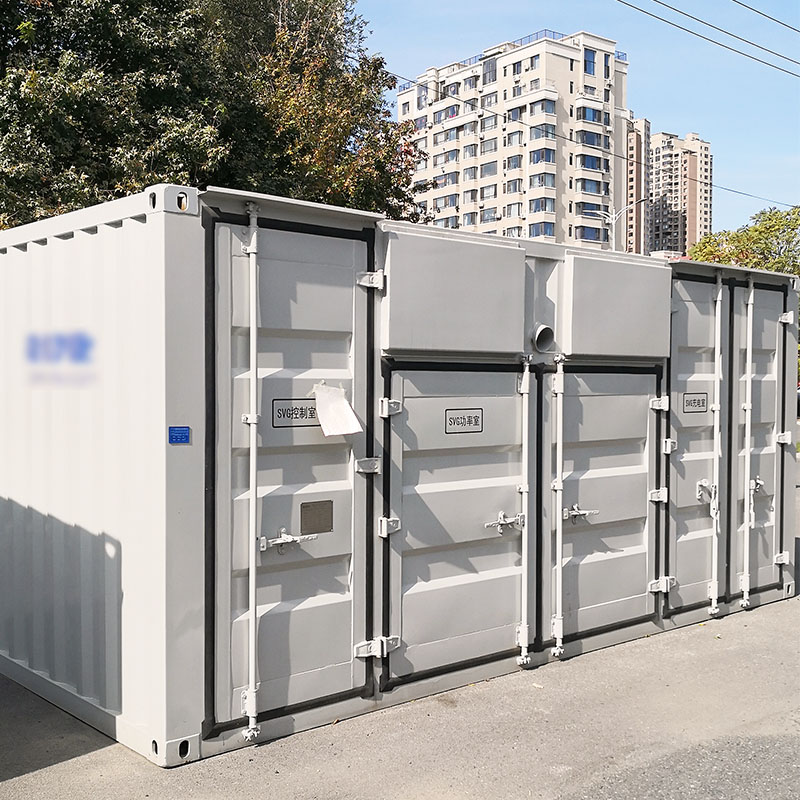
SVG for Dynamic Reactive Power Compensation and Power Factor Correction
Real-time, continuous reactive power adjustment under rapidly varying loads
Industrial facilities face significant challenges with fluctuating loads from equipment like motors, welders, and production lines. Traditional capacitor banks respond too slowly for modern dynamic operations—taking seconds to switch between compensation levels—while Static Var Generators (SVGs) deliver sub-cycle reactive power adjustments in under 5 milliseconds. This rapid response prevents voltage instability and avoids utility-imposed power factor penalties during sudden load changes. For example, when a 500HP motor starts, SVGs instantly inject capacitive reactive power to offset the inductive surge. Unlike stepwise transitions in passive systems, SVGs provide continuous, seamless compensation—maintaining stable voltage profiles even under erratic load patterns. Real-time adjustment reduces transmission losses by up to 25% compared to fixed capacitor banks and eliminates disruptive switching transients.
Bi-directional (inductive/capacitive) compensation enabling unity power factor across load cycles
SVGs dynamically switch between inductive and capacitive modes—unlike fixed capacitor banks limited to single-direction compensation—to maintain near-unity power factor (≥0.98) across all operating conditions. This bidirectional capability resolves both under-compensation and over-compensation risks:
| Scenario | SVG Response | Outcome |
|---|---|---|
| Inductive Load Dominance (e.g., motors at full capacity) | Inject capacitive reactive power | Prevents lagging power factor penalties |
| Capacitive Load Dominance (e.g., lightly loaded transformers) | Absorb excess reactive power | Eliminates overvoltage and resonance risks |
| Mixed Load Environments | Simultaneous inductive/capacitive balancing | Stabilizes voltage within ±1% of nominal |
This autonomous adaptation maintains optimal power quality throughout production cycles—including seasonal or shift-based load variations—without manual reconfiguration. Semiconductor fabs using SVGs report 15% lower energy costs from eliminated power factor penalties and reduced I²R losses in distribution infrastructure.
SVG for Voltage Stability and Grid Resilience
Instantaneous reactive power injection to suppress voltage sags and swells during faults or switching events
SVGs provide sub-cycle (<5 ms) reactive power injection to actively suppress voltage fluctuations during grid disturbances. When voltage sags occur—such as from short circuits or capacitor bank switching—SVGs inject capacitive reactive power to boost voltage within milliseconds. During voltage swells, they absorb excess reactive power inductively. This instantaneous response prevents equipment tripping and production downtime in mission-critical industrial settings. For instance, voltage sags lasting just three cycles can trigger process interruptions costing $740k per incident in semiconductor manufacturing (Ponemon Institute, The Economic Impact of Power Quality Events, 2023). In contrast to traditional capacitor banks with 5–10 cycle delays, SVGs maintain voltage within ±1% of nominal through continuous IGBT-based modulation—ensuring uninterrupted operation and compliance with IEEE 1159 voltage tolerance guidelines.
Case evidence: SVG-stabilized voltage profiles in semiconductor fabs with sensitive tooling
Semiconductor manufacturing facilities require extreme voltage stability—often ±0.5% tolerance—for nanometer-scale photolithography and etching tools. A leading Asian fab experienced recurring 7% voltage sags during photolithography tool startups, causing frequent tool resets and wafer scrap. Post-SVG implementation data demonstrated:
| Voltage Parameter | Pre-SVG | Post-SVG | Improvement |
|---|---|---|---|
| Sag magnitude | 7.2% | 0.8% | 89% reduction |
| Event duration | 8 cycles | <1 cycle | 87.5% faster correction |
| Tool error rate | 23/hr | 2/hr | 91% reduction |
The SVG solution sustained power quality within IEEE 519 harmonic and voltage deviation limits while enabling an 11% throughput increase. Given that voltage deviations exceeding 0.5% cause wafer scrap losses exceeding $500k per incident in advanced nodes (SEMI, Power Quality Requirements for Advanced Semiconductor Manufacturing, 2023), this level of stabilization delivers measurable ROI in yield protection and operational continuity.
SVG for Flicker Suppression and Harmonic Mitigation
Sub-cycle response (<5 ms) neutralizing flicker from arc furnaces and welders (Pst reduced to <0.35)
Arc furnaces and resistance welders generate rapid, stochastic load variations that cause perceptible voltage flicker—disrupting lighting systems and destabilizing precision equipment. Mechanically switched capacitor banks cannot track these sub-cycle fluctuations, but SVGs respond in under 5 milliseconds to inject or absorb reactive current precisely when needed. Field deployments confirm SVG installations reduce the short-term flicker severity index (Pst) to below 0.35—well within the stringent limits of IEC 61000-3-7 for industrial consumers. Crucially, SVGs also mitigate harmonic currents generated by the same nonlinear loads: their IGBT-based inverters can be programmed to inject counter-harmonic currents, reducing total harmonic distortion (THD) without requiring separate active harmonic filters. This dual functionality simplifies system architecture, lowers capital and maintenance costs, and ensures consistent compliance with IEEE 519 and IEC 61000-3-6 standards—making SVGs especially valuable in steelmaking, heavy fabrication, and other industries where arc stability and weld quality depend directly on clean, stable voltage.
FAQ Section
What are SVGs used for?
Static Var Generators (SVGs) are used for dynamic reactive power compensation, power factor correction, voltage stability, flicker suppression, and harmonic mitigation in industrial and power grid applications.
Why are SVGs better than traditional capacitor banks?
Unlike traditional capacitor banks, SVGs provide sub-cycle responses to rapid load variations, enabling faster and seamless compensation without disruptive transients.
How do SVGs improve power factor?
SVGs dynamically switch between inductive and capacitive compensation modes to maintain unity power factor across varying load cycles, minimizing penalties and optimizing energy efficiency.
Can SVGs handle voltage sags and swells?
Yes, SVGs inject or absorb reactive power within milliseconds to stabilize voltage during sags, swells, or grid disturbances.
Do SVGs help reduce flicker and harmonics?
SVGs actively suppress flicker caused by arc furnaces or welders and mitigate harmonic distortion by injecting counter-harmonic currents.