EN
EN
 AR
AR
 BG
BG
 HR
HR
 CS
CS
 DA
DA
 FR
FR
 DE
DE
 EL
EL
 HI
HI
 PL
PL
 PT
PT
 RU
RU
 ES
ES
 CA
CA
 TL
TL
 ID
ID
 SR
SR
 SK
SK
 SL
SL
 UK
UK
 VI
VI
 ET
ET
 HU
HU
 TH
TH
 MS
MS
 SW
SW
 GA
GA
 CY
CY
 HY
HY
 AZ
AZ
 UR
UR
 BN
BN
 LO
LO
 MN
MN
 NE
NE
 MY
MY
 KK
KK
 UZ
UZ
 KY
KY


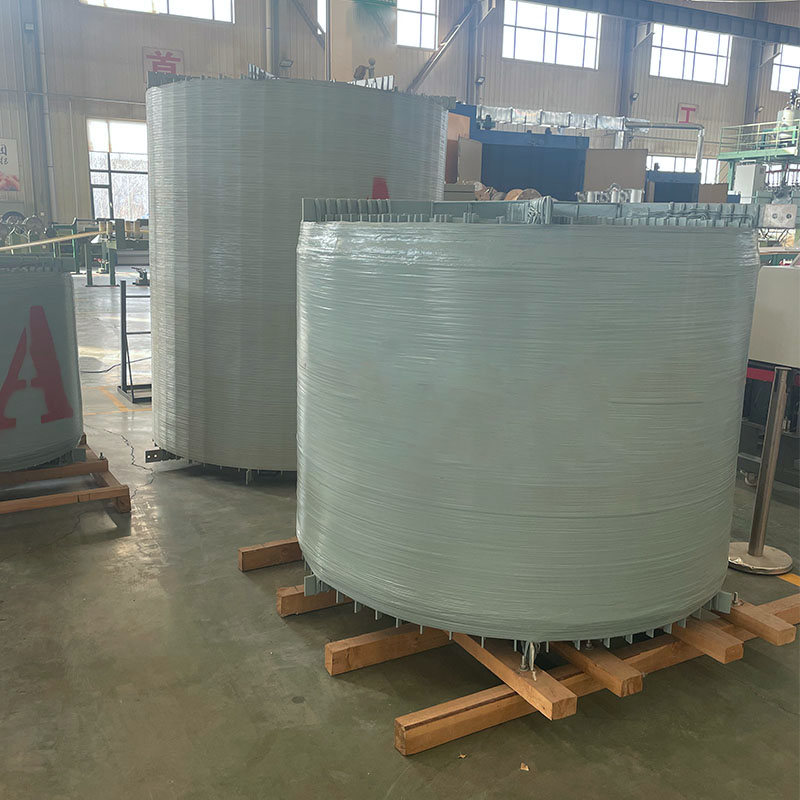
Shunt Reactors: Voltage Regulation and Reactive Power Absorption
How Shunt Reactors Suppress Ferranti Effect and Stabilize Transmission Voltages
The Ferranti effect—voltage rise along lightly loaded or open-ended long transmission lines—stems from capacitive charging current dominating inductive voltage drop. Shunt reactors counteract this by absorbing reactive power, flattening the voltage profile and preventing overvoltage stress on insulation and equipment. Installed in parallel at line terminals or intermediate substations, they provide continuous inductive compensation. As loading changes, reactor banks are switched in or out to maintain optimal reactive balance. This passive yet precise regulation is essential for steady-state stability—especially in networks with extensive high-voltage overhead lines or underground cables. Without such absorption capacity, capacitive buildup can excite low-frequency oscillations that erode damping margins, a contributing factor in several major grid disturbances analyzed by system operators and reliability councils.
Dry-Type vs. Oil-Immersed Shunt Reactors: Urban Deployment Trends and IEC 60076-6 Compliance
Dry-type and oil-immersed shunt reactors serve distinct operational niches. Dry-type units use air or resin-based insulation, eliminating fire hazards, oil spills, and environmental containment concerns—making them ideal for urban substations, indoor facilities, and proximity to residential infrastructure. They demand less maintenance and align with tightening urban safety codes. Oil-immersed reactors offer superior thermal performance and higher power density, supporting cost-effective deployment in outdoor, high-capacity transmission corridors where space and fire risk are less constrained. Both designs must comply with IEC 60076-6, the international standard governing reactor design, testing, thermal limits, and short-circuit withstand capability. Industry trends show accelerating adoption of dry-type reactors in new urban projects, while oil-immersed units remain the workhorse for remote, high-MVAR applications—where decades of field-proven reliability and lifecycle economics prevail.
Series Reactors: Fault Current Limiting and Transient Stability Enhancement
Damping Power Swings and Improving Rotor Angle Stability During Asymmetrical Faults
Asymmetrical faults generate negative-sequence currents that induce torsional stress and rotor angle swings in synchronous generators. Series reactors mitigate this by increasing the fault path impedance, directly limiting fault current magnitude and slowing its rate of rise (di/dt). This reduces electromagnetic torque imbalance on generator rotors, damping power oscillations and preserving synchronism during single-line-to-ground or phase-to-phase faults. Strategically placed at high-fault-current locations—such as transmission line terminations or critical busbars—they also extend relay operating time, improving selectivity and coordination. Properly sized, they enhance transient stability margins without requiring generator upgrades or network reconfiguration—a practical, high-impact solution for aging or renewable-integrated grids.
Hybrid Solutions: Series Reactors Integrated with Superconducting Fault Current Limiters
Conventional series reactors impose a fixed impedance that causes steady-state losses and voltage drop. Hybrid systems overcome this by pairing a low-impedance series reactor with a superconducting fault current limiter (SFCL). Under normal operation, the SFCL remains in its zero-resistance superconducting state—introducing negligible loss or voltage deviation. During a fault, it quenches within milliseconds, rapidly inserting high resistance in series with the reactor to suppress peak current. This synergy allows smaller, more efficient reactors while achieving equivalent or superior fault-current limitation. Crucially, the SFCL’s ultrafast response curbs the first-swing acceleration of nearby generators, directly bolstering rotor angle stability—particularly valuable in grids with inverter-dominated generation and reduced system inertia. As SFCL manufacturing scales, hybrid solutions are gaining traction for their operational flexibility, improved voltage support, and competitive total cost of ownership.
Grounding and Resonance-Control Reactors: Enhancing System Resilience and Arc Suppression
Grounding reactors manage fault behavior and neutral-point dynamics during ground faults. Among these, the Petersen coil—also known as the arc suppression coil—is a cornerstone of resonant grounding systems.
Petersen Coil (Arc Suppression Coil) Operation and Its Role in Resonant Grounding Systems
The Petersen coil is an iron-core, adjustable inductor connected between the system neutral and earth. Its inductance is precisely tuned to resonate with the network’s total phase-to-ground capacitance. During a single line-to-ground fault, the coil injects an inductive current that cancels the capacitive fault current—reducing the residual current to a small, non-arcing value (typically <10 A). This enables the arc to self-extinguish, avoiding immediate circuit interruption and maintaining service continuity. Resonant grounding also suppresses transient overvoltages—limiting insulation stress and equipment damage. Modern coils incorporate automatic tap changers to maintain resonance despite topology changes or seasonal capacitance shifts. Utilities deploy them to transform inherently disruptive arcing faults into manageable events—significantly enhancing resilience, especially in medium-voltage distribution networks with long cable feeders.
Harmonic Mitigation Reactors: Preventing Resonance and Supporting Power Quality
Industrial variable frequency drives (VFDs) introduce harmonic currents that distort voltage waveforms and risk parallel resonance with power factor correction capacitors. Harmonic mitigation reactors prevent amplification by altering system impedance characteristics—either blocking harmonics or shifting resonant frequencies away from problematic bands.
Tuned vs. Detuned Line Reactors for Harmonic Filtering in Industrial VFD Installations
Tuned reactors—paired with capacitors—form a low-impedance path at a specific harmonic frequency (e.g., 5th or 7th), effectively diverting and absorbing that harmonic. While highly effective when precisely matched, they carry inherent resonance risk if system impedance drifts due to load variation or capacitor aging. Detuned reactors, in contrast, are designed to shift the system’s parallel resonant frequency below the lowest dominant harmonic—typically to 135–190 Hz in 50/60 Hz systems. This creates an anti-resonant condition that prevents harmonic amplification and protects capacitors from overload and premature failure. Though they do not eliminate harmonics, detuned line reactors deliver robust, maintenance-free protection across varying operating conditions. For most industrial VFD installations—where reliability, simplicity, and cost-effectiveness outweigh the need for deep harmonic attenuation—detuned reactors are the preferred and widely adopted solution.
FAQ Section
What is the role of shunt reactors in voltage regulation?
Shunt reactors absorb reactive power to counteract voltage rise caused by the Ferranti effect. This helps stabilize transmission voltages and prevent overvoltage stress on electrical equipment.
How do dry-type and oil-immersed shunt reactors differ?
Dry-type reactors use air or resin for insulation, ideal for urban and indoor environments due to fewer fire risks. Oil-immersed reactors, on the other hand, offer higher thermal performance, suitable for outdoor and high-capacity applications.
What is the purpose of series reactors in power systems?
Series reactors limit fault current and enhance transient stability by increasing fault path impedance, reducing the impact of asymmetrical faults on generator rotor angle stability.
How do Petersen coils improve fault resilience?
Petersen coils inject an inductive current to cancel capacitive fault current, enabling arcs to self-extinguish and preventing circuit interruptions during single line-to-ground faults.
What is the difference between tuned and detuned reactors in harmonic mitigation?
Tuned reactors target specific harmonics, absorbing them effectively but carry resonance risks. Detuned reactors shift resonant frequencies, preventing harmonic amplification while ensuring reliable protection for capacitors.
Table of Contents
- Shunt Reactors: Voltage Regulation and Reactive Power Absorption
- Series Reactors: Fault Current Limiting and Transient Stability Enhancement
- Grounding and Resonance-Control Reactors: Enhancing System Resilience and Arc Suppression
- Harmonic Mitigation Reactors: Preventing Resonance and Supporting Power Quality
-
FAQ Section
- What is the role of shunt reactors in voltage regulation?
- How do dry-type and oil-immersed shunt reactors differ?
- What is the purpose of series reactors in power systems?
- How do Petersen coils improve fault resilience?
- What is the difference between tuned and detuned reactors in harmonic mitigation?