EN
EN
 AR
AR
 BG
BG
 HR
HR
 CS
CS
 DA
DA
 FR
FR
 DE
DE
 EL
EL
 HI
HI
 PL
PL
 PT
PT
 RU
RU
 ES
ES
 CA
CA
 TL
TL
 ID
ID
 SR
SR
 SK
SK
 SL
SL
 UK
UK
 VI
VI
 ET
ET
 HU
HU
 TH
TH
 MS
MS
 SW
SW
 GA
GA
 CY
CY
 HY
HY
 AZ
AZ
 UR
UR
 BN
BN
 LO
LO
 MN
MN
 NE
NE
 MY
MY
 KK
KK
 UZ
UZ
 KY
KY


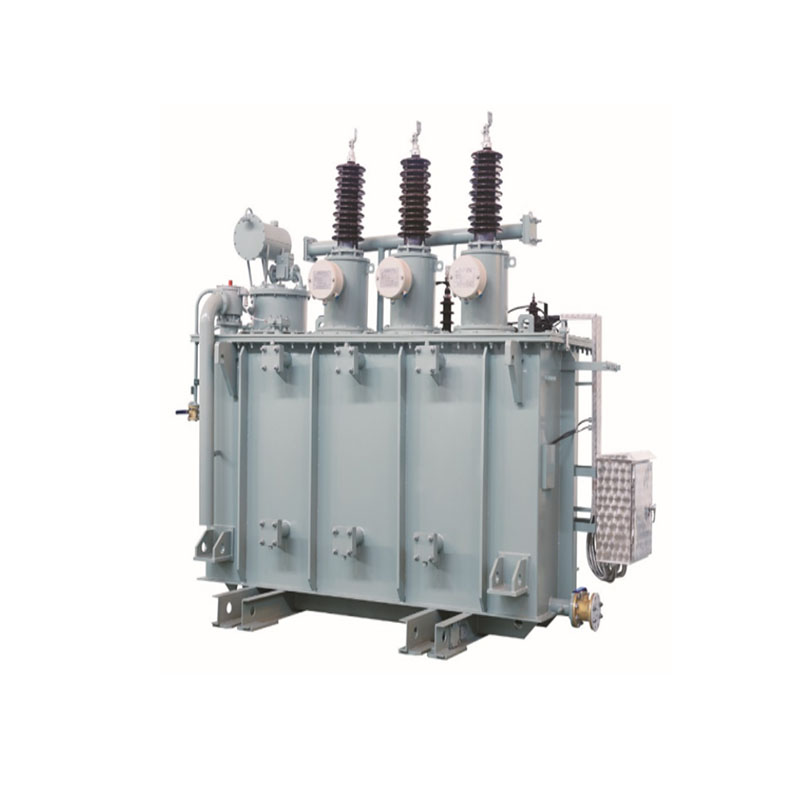
Understanding Transformer Accuracy Classes and Standards
Decoding CT Accuracy Classes: 0.1, 0.2, and 0.5 Under IEC 61869-2
Current transformers come with standard accuracy ratings set out in the IEC 61869-2 guidelines. These ratings are basically numbered things like 0.1, 0.2, and 0.5 that tell us how much error is allowed when measuring current at different loads. For instance, a CT marked as Class 0.1 stays within about plus or minus 0.1%, whereas the Class 0.5 version can drift up to half a percent either way. The lower the number, the better the accuracy generally speaking. Class 0.1 units are typically used where money matters most since even small errors affect billing calculations directly. Class 0.2 offers good enough precision for important protection systems without breaking the bank, while Class 0.5 works fine for everyday monitoring tasks. According to the standards, manufacturers must test these devices across a range from 5% all the way up to 120% of their rated capacity to ensure they work properly in real world conditions. They also need to check not just the measurement accuracy but other factors too, including how well they handle phase angles and respond to changes in load conditions.
How Accuracy Class Defines Maximum Permissible Error at Rated Conditions
The accuracy class basically tells us what the maximum possible error is (both ratio and phase errors combined) when everything is perfect in the lab setting. We're talking about measurements taken at the rated frequency, standard temperature around 20 degrees Celsius, and when the secondary burden matches precisely what it's supposed to be. Take a Class 0.2 CT as an example. This device will stay within 0.2 percent error margin only if it runs at full rated current and stays within plus or minus 25 percent of its specified burden level. Things start going off track pretty quickly once real world factors come into play though. When there are changes in load, burden settings, or surrounding temperatures, even small differences from ideal conditions can cause the equipment to perform outside its stated class specifications. If the burden goes beyond acceptable tolerances, the whole classification becomes invalid, and we might see measurement errors creeping up past 0.5 percent during actual field operations.
Key Electrical Parameters That Determine Real-World Transformer Accuracy
Burden Matching and Secondary Impedance: Preventing Accuracy Degradation
Getting the burden right matters a lot when talking about transformers. The load on the secondary winding is usually what causes those pesky accuracy issues we see in practice. If the actual load goes beyond what's rated in VA terms, things start going wrong fast. The core gets saturated, which messes up both the ratio and phase angle measurements. Take a Class 0.5 current transformer for instance. Push it past 40% overburden and suddenly it acts more like a 0.8 class unit. And don't forget about secondary impedance either. Higher impedance means bigger voltage drops along those connecting wires and through relay coils, which warps the signal quality. We've seen cases where just a 20% mismatch adds around 0.4% error in billing meters alone. That kind of deviation knocks out Class 0.2 compliance completely. For anyone needing serious precision, getting burden matching spot on isn't just good practice anymore. It's absolutely essential if they want their equipment to stay within those IEC 61869-2 specs during normal operation conditions.
Rated vs. Actual Current Range: Linearity and Low-Load Error in Measurement Transformers
Transformers tend to become nonlinear when they operate outside their sweet spot current range. At currents below about 5% of what they're rated for, there simply isn't enough core excitation happening, leading to significant errors. Even those fancy Class 0.5 transformers can sometimes go over 1% error when running on light loads. On the high end, things get worse too. Once we push past 120% of the rated capacity, magnetic saturation kicks in and messes up the linearity completely, usually making deviations jump above 2%. Take a typical CT rated at 100 amps as an example. It works great from around 10 amps all the way up to 120 amps, but drop down to something like 5 amps and suddenly the error creeps over 2%. To keep things accurate, engineers need to pick transformers where the real world operating current sits comfortably in the middle of the rated range rather than just anywhere between the minimum and maximum values. This approach helps avoid those pesky low load inaccuracies and keeps saturation problems from ruining signal integrity.
Environmental and System-Level Factors Affecting Transformer Performance
Temperature, Frequency, and Harmonics: Quantifying Deviations from Ideal Accuracy
Transformers often lose accuracy when exposed to environmental and system stresses that go well beyond what's specified in laboratory tests. When temperatures change, they affect both the core permeability and winding resistance. For instance, if the temperature goes up just 8 degrees Celsius past the normal operating range, this speeds up how quickly insulation ages and causes noticeable changes in measurement ratios according to IEC 60076-7 from 2023. Another problem comes from grid frequency instability which is quite common in weak grids or isolated systems. This leads to core saturation errors, particularly when frequencies drop below normal levels. Harmonic distortions create another tricky issue altogether. Third and fifth order harmonics above 10% total harmonic distortion actually warp the waveform shape in ways that standard accuracy ratings simply don't account for. DC offset currents make matters worse by creating residual magnetism in cores, which throws off the ability to detect when waveforms cross zero points. Real world testing shows something interesting too. Transformers that meet Class 0.5 standards in controlled lab environments typically only achieve around 1.0 level accuracy when dealing with all these combined stresses including heat, harmonics, and frequency variations. To combat these problems, engineers need to plan ahead by reducing load capacity by about 15 to 20 percent in hotter installations and installing harmonic filters whenever total harmonic distortion goes over 8 percent.
Validating and Specifying High-Accuracy Transformers for Critical Applications
Case Study: Why a Class 0.2 Current Transformer Delivered 0.5-Level Accuracy in Substation Energy Metering
An energy metering project at a substation ran into serious problems with accuracy when a Class 0.2 current transformer (CT) ended up performing at only 0.5 level accuracy. After looking into things, we found out there were actually three different issues in the field that hadn't been considered during factory calibration. First off, the harmonic distortion levels went way over 15% THD because of all those non-linear loads around, which created phase angle errors that regular ratio error tests completely missed. Then there was the temperature problem too. The equipment had to deal with temperatures swinging from -10 degrees Celsius to as high as 50 degrees, and this caused changes in core permeability that added an extra 0.1% ratio error on top of what was already specified. And finally, the secondary burden came out to be 4.5 VA, which is 40% higher than the CT's 3.2 VA rating. This discrepancy caused a phase displacement increase of 0.3 degrees and really hurt the overall accuracy. All these combined pushed the total error past the 0.2% limit. What this teaches us is important: just because something passes lab tests doesn't mean it will work perfectly in real world conditions. When dealing with critical power measurements, specifications need to account for actual harmonic profiles, realistic temperature ranges, and real burden measurements instead of relying solely on what's printed on the equipment label.
FAQ
What are CT accuracy classes?
CT accuracy classes, such as 0.1, 0.2, and 0.5, denote the maximum permissible error of current transformers as per IEC 61869-2 standards. The lower the number, the more precise the measurement.
Why is burden matching important for transformers?
Burden matching ensures the transformer's secondary winding load aligns with its rated capacity, preventing core saturation and maintaining accuracy.
How do environmental factors affect transformer accuracy?
Factors such as temperature changes, frequency instability, and harmonic distortions can lead to decreased transformer accuracy by altering core permeability and winding resistance.