EN
EN
 AR
AR
 BG
BG
 HR
HR
 CS
CS
 DA
DA
 FR
FR
 DE
DE
 EL
EL
 HI
HI
 PL
PL
 PT
PT
 RU
RU
 ES
ES
 CA
CA
 TL
TL
 ID
ID
 SR
SR
 SK
SK
 SL
SL
 UK
UK
 VI
VI
 ET
ET
 HU
HU
 TH
TH
 MS
MS
 SW
SW
 GA
GA
 CY
CY
 HY
HY
 AZ
AZ
 UR
UR
 BN
BN
 LO
LO
 MN
MN
 NE
NE
 MY
MY
 KK
KK
 UZ
UZ
 KY
KY


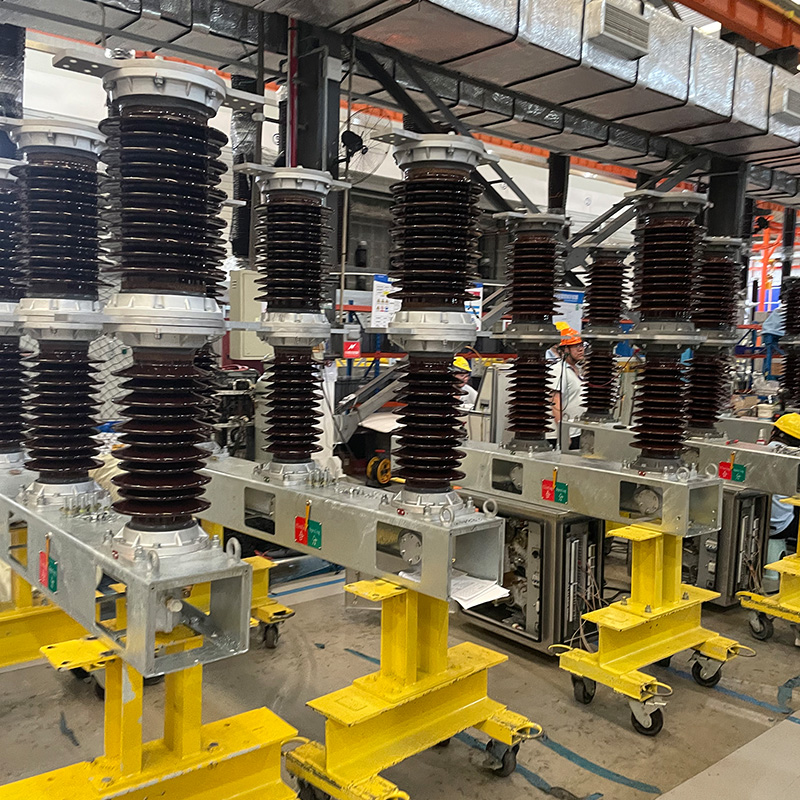
SF6 Emissions Control and Leak Management in Circuit Breakers
Mandatory leak rate limits and reporting obligations for SF6 circuit breaker owners
Regulatory authorities enforce strict annual leak thresholds—typically below 1% of total SF6 capacity—for circuit breakers. Owners must document and report exceedances through mandatory submissions, with penalties for non-compliance. For example, California’s AB 32 requires quarterly leak tracking for high-voltage installations. These measures address SF6’s 23,500× CO₂-equivalent global warming potential (IPCC 2021). Failure to meet obligations triggers fines up to $50,000 per violation under federal guidelines. Robust digital record-keeping systems are now essential for audit trails.
Leak detection, repair protocols, and preventive maintenance standards for SF6 circuit breakers
Advanced infrared sensors and ultrasonic detectors identify leaks as small as 0.1%/year. Upon detection, technicians follow standardized repair sequences:
- Immediate isolation of affected compartments
- Seal replacement using fluoropolymer materials
- Pressure decay validation before re-energizing
Preventive protocols mandate quarterly inspections and comprehensive 5-year maintenance cycles. Technicians require IEC 62271-1 certification for handling procedures. When implemented systematically, these standards reduce emissions by 76%, according to 2023 transmission-sector studies.
Regulatory Frameworks Governing SF6 Use in Circuit Breakers
Federal (EPA) and state-level regulations targeting SF6 in gas-insulated circuit breakers
The EPA mandates strict SF6 emission controls under the Clean Air Act, requiring utilities to report annual leakage rates exceeding 1% for high-voltage circuit breakers (40 CFR Part 98). Federal rules enforce mandatory leak detection via infrared cameras and acoustic sensors, with repairs required within 30 days. Simultaneously, states like California implement CARB regulations demanding 90% SF6 recovery during maintenance. These layered frameworks directly respond to SF6’s extreme climate impact—23,500× that of CO₂—and are enforced through audits and escalating penalties. Non-compliance triggers fines up to $37,500 per violation day under EPA enforcement protocols.
| Regulation Level | Key Requirements | Enforcement Mechanism |
|---|---|---|
| Federal (EPA) | Annual leak reporting Mandatory repair timelines |
Fines up to $37,500/day EPA audits |
| California (CARB) | 90% SF6 recovery rate Phaseout in new installations |
Equipment certification bans Quarterly emissions reporting |
State-specific phaseout timelines and enforcement for SF6 circuit breakers and switchgear
Twelve states—including Washington, Vermont, and Oregon—are accelerating the transition away from SF6. Oregon mandates 100% SF6-free switchgear in new substations by 2026, backed by $50,000 penalties for violations. Regulators conduct unannounced inspections verifying gas-tracking logs and maintenance records. Utilities must submit annual audited inventories demonstrating ≤0.5% leakage rates to avoid operational restrictions. While this regulatory patchwork increases compliance complexity, it has driven industry-wide emission reductions exceeding 50% since 2015 (U.S. EPA Greenhouse Gas Inventory).
Responsible SF6 Handling, Recovery, and Reuse for Circuit Breakers
EPA and IEC-Compliant SF6 Recovery, Purification, and Recycling Protocols for Circuit Breakers
Owners of SF6 circuit breakers must implement strict recovery and recycling protocols to mitigate environmental risk. Industry standards require sulfur hexafluoride (SF6) gas to be captured during decommissioning or maintenance using vacuum extraction systems—venting is strictly prohibited under EPA regulations (40 CFR Part 98). Recovered SF6 undergoes triple-phase purification:
- Filtration removes arc byproducts and particulates
- Cryogenic separation eliminates air impurities
- Molecular sieves extract moisture to <10 parts per million
Recycled gas must pass dielectric testing and purity verification via gas chromatography, per IEC 60480. Proper implementation enables 97% reuse rates for reclaimed SF6—significantly reducing both emissions and procurement costs. Non-conforming practices risk penalties up to $50,000 per violation under the Clean Air Act.
FAQ
What regulatory limits are set for SF6 leakage in circuit breakers?
Regulatory limits generally demand that annual leak thresholds remain below 1% of the total SF6 capacity. Non-compliance can lead to heavy fines of up to $50,000 per violation.
How are SF6 leaks detected?
Advanced tools like infrared sensors and ultrasonic detectors are used to identify leaks as small as 0.1% per year.
What maintenance measures are required for reducing SF6 emissions?
Quarterly inspections and comprehensive maintenance every five years are mandated, along with IEC 62271-1-certified handling procedures.
What happens if SF6 limits are exceeded?
Exceeding SF6 thresholds may result in mandatory audits, fines up to $50,000, or operational restrictions, depending on the governing body.
How can recovered SF6 be recycled?
Recovered SF6 undergoes a triple-phase purification process involving filtration, cryogenic separation, and molecular sieves to ensure it can be reused effectively.