EN
EN
 AR
AR
 BG
BG
 HR
HR
 CS
CS
 DA
DA
 FR
FR
 DE
DE
 EL
EL
 HI
HI
 PL
PL
 PT
PT
 RU
RU
 ES
ES
 CA
CA
 TL
TL
 ID
ID
 SR
SR
 SK
SK
 SL
SL
 UK
UK
 VI
VI
 ET
ET
 HU
HU
 TH
TH
 MS
MS
 SW
SW
 GA
GA
 CY
CY
 HY
HY
 AZ
AZ
 UR
UR
 BN
BN
 LO
LO
 MN
MN
 NE
NE
 MY
MY
 KK
KK
 UZ
UZ
 KY
KY


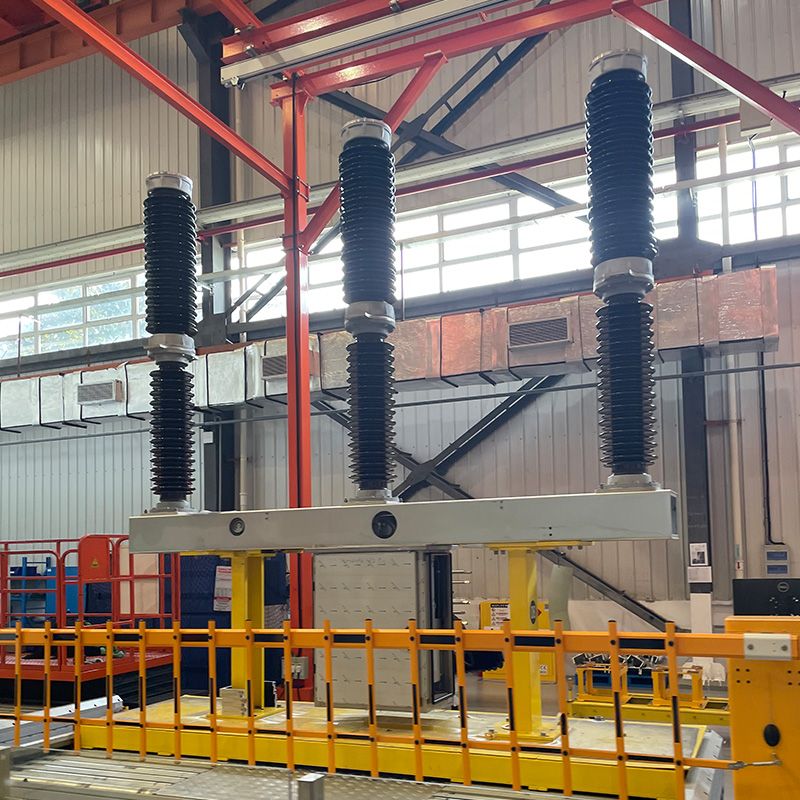
Rated Service Life vs. Real-World Longevity of SF6 Circuit Breakers
Manufacturer-rated lifespan (20–30 years) and its design assumptions
Manufacturers typically specify SF6 circuit breaker service lives of 20–30 years under ideal conditions—standardized installation, strict adherence to maintenance schedules, and operation within defined electrical and environmental parameters. Design calculations incorporate conservative estimates of mechanical operations (5,000–20,000 cycles) and interruption performance validated in controlled laboratory testing per IEEE C37.100.1 and IEC 62271-1. However, these ratings do not reflect real-world variability such as voltage transients, non-standard load profiles, or inconsistent maintenance—creating a well-documented gap between theoretical longevity and field performance.
Field data insights: Actual service life in diverse industrial environments
Field experience consistently shows reduced service life across demanding applications. Utility reliability reports indicate average operational lifespans drop to 12–18 years in high-pollution zones. Units in coastal facilities exhibit 40% faster degradation due to salt-induced corrosion, while those in mining or cement plants require up to 50% more frequent maintenance from particulate contamination. Crucially, installations with rigorous SF6 gas monitoring—tracking moisture, purity, and density—outperform peers by 5–7 years. This underscores that gas integrity, not just time or cycle count, is the strongest predictor of real-world longevity.
Key Factors That Reduce SF6 Circuit Breaker Service Life
SF6 Gas Integrity: Moisture, Purity, Leakage, and Density Management
SF6 gas integrity is foundational to safe, reliable operation—and its deterioration is the leading cause of premature failure. Moisture exceeding 50 ppm reacts with arc byproducts to form corrosive hydrofluoric and sulfuric acids, accelerating internal component decay (IEEE C37.122.1-2014). Air infiltration or decomposition products reduce dielectric strength by up to 30%, raising the risk of flashover during fault interruption. Annual leakage above 0.5% depletes gas density below functional thresholds, impairing arc-quenching capability and triggering safety lockouts. Effective management relies on:
- Continuous density monitoring via calibrated relays and pressure sensors
- Periodic dew-point testing to detect early moisture intrusion
- Decomposition product analysis (e.g., SO₂, HF, SOF₂) during scheduled maintenance
- Seal integrity verification using ultrasonic leak detection
Density deviations beyond ±5% of rated pressure demand immediate investigation and correction—delayed response increases the likelihood of catastrophic failure during fault events.
Environmental Stressors: Dust, Corrosion, Temperature Extremes, and Pollution
Environmental exposure compounds wear through cumulative physical and chemical stress. Particulate buildup on insulators creates conductive tracking paths—especially in dusty industrial settings—raising flashover risk. Corrosion weakens mechanical linkages and contact assemblies, increasing operating force by 15–40% (NEMA AB-4), which strains drive mechanisms and accelerates wear. Operation outside the standard -30°C to 40°C range introduces additional hazards:
- Extreme cold risks SF6 liquefaction, lowering dielectric strength
- Thermal cycling hardens elastomeric seals, promoting leaks
- Repeated expansion/contraction induces microcracking in epoxy insulators
Coastal sites benefit from nickel-plated hardware and enhanced sealing; chemical-intensive environments require UV- and corrosion-resistant coatings. Proven mitigation includes climate-controlled enclosures, quarterly cleaning protocols, and application of corrosion-inhibiting compounds where ambient conditions exceed design limits.
Mechanical Degradation and Arc Contact Wear in SF6 Circuit Breakers
Contact erosion patterns, diagnostic indicators, and replacement triggers
Arc contact erosion is an inevitable consequence of switching duty—but its rate and impact are highly controllable. Repetitive arcing causes pitting, surface roughening, and material loss, directly affecting contact resistance and interrupting performance. Diagnostic red flags include elevated micro-ohm readings (measured during routine maintenance), visible carbon deposits, discoloration, or asymmetrical wear. Advanced diagnostics—such as X-ray imaging for subsurface cracks or gas chromatography for SO₂/SOF₂ traces—provide early insight into internal degradation. Per IEEE C37.100.1, replacement is warranted when contact resistance exceeds 50–100 µΩ or erosion depth surpasses 20–30% of original cross-section. Implementing biennial condition-based inspections—aligned with operational risk profile—enables timely intervention, preventing dielectric failure and extending service life well beyond nominal ratings.
Optimizing SF6 Circuit Breaker Lifespan Through Proactive Maintenance
Risk-based maintenance aligned with IEC 62271-1 and IEEE C37.100.1
A shift from calendar-driven to risk-based maintenance—grounded in IEC 62271-1 and IEEE C37.100.1—delivers measurable gains in reliability and cost efficiency. These standards guide prioritization of critical subsystems (gas systems, contacts, mechanisms) based on failure probability and operational consequence. Facilities applying this methodology report 47% fewer unplanned outages and routinely achieve service lives 8–12 years beyond manufacturer ratings. One documented case avoided $340,000 in downtime-related losses through an $8,000 proactive servicing intervention—highlighting the strong ROI of condition-driven action. Core maintenance actions include:
- SF6 gas purity and moisture verification (not just topping up)
- Contact resistance trending to identify progressive erosion
- Lubrication cycle optimization for operating mechanisms
- Post-fault arc chamber inspection and cleaning
This approach transforms maintenance from a compliance obligation into a strategic asset—maximizing capital value while ensuring continuous conformance with international safety and performance requirements.
FAQ Section
What is the rated service life of an SF6 circuit breaker?
Manufacturers typically rate SF6 circuit breakers for 20–30 years under ideal conditions, including strict maintenance schedules and standard electrical parameters.
What factors contribute to the reduced service life of SF6 circuit breakers in real-world scenarios?
Factors include environmental stressors like dust, salt-induced corrosion, temperature extremes, and suboptimal SF6 gas integrity.
How can maintenance extend the lifespan of SF6 circuit breakers?
Proactive, risk-based maintenance—focused on monitoring SF6 gas purity, contact resistance, and environmental conditions—extends service life and minimizes unplanned downtime.
Why is SF6 gas integrity important?
SF6 gas integrity ensures safe and reliable operation. Deterioration through moisture, leakage, or decomposition reduces dielectric strength and increases failure risks.
What is a key diagnostic tool for monitoring SF6 circuit breakers?
Diagnostics such as dew-point testing, decomposition product analysis, and ultrasonic leak detection are crucial for assessing SF6 gas integrity and mechanical health.
Table of Contents
- Rated Service Life vs. Real-World Longevity of SF6 Circuit Breakers
- Key Factors That Reduce SF6 Circuit Breaker Service Life
- Mechanical Degradation and Arc Contact Wear in SF6 Circuit Breakers
- Optimizing SF6 Circuit Breaker Lifespan Through Proactive Maintenance
-
FAQ Section
- What is the rated service life of an SF6 circuit breaker?
- What factors contribute to the reduced service life of SF6 circuit breakers in real-world scenarios?
- How can maintenance extend the lifespan of SF6 circuit breakers?
- Why is SF6 gas integrity important?
- What is a key diagnostic tool for monitoring SF6 circuit breakers?