EN
EN
 AR
AR
 BG
BG
 HR
HR
 CS
CS
 DA
DA
 FR
FR
 DE
DE
 EL
EL
 HI
HI
 PL
PL
 PT
PT
 RU
RU
 ES
ES
 CA
CA
 TL
TL
 ID
ID
 SR
SR
 SK
SK
 SL
SL
 UK
UK
 VI
VI
 ET
ET
 HU
HU
 TH
TH
 MS
MS
 SW
SW
 GA
GA
 CY
CY
 HY
HY
 AZ
AZ
 UR
UR
 BN
BN
 LO
LO
 MN
MN
 NE
NE
 MY
MY
 KK
KK
 UZ
UZ
 KY
KY


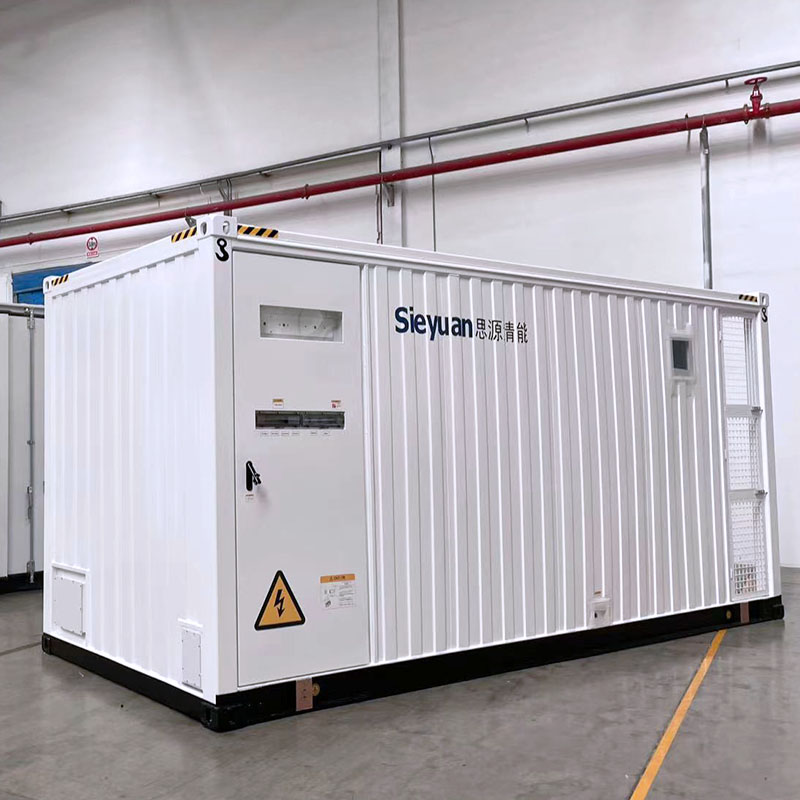
Power and Energy Capacity: Scaling BESS for Grid and Application Needs
Distinguishing Rated Energy (kWh/MWh) from Maximum Power (kW/MW)
Rated energy (kWh/MWh) defines a Battery Energy Storage System’s (BESS) total storage capacity, while maximum power (kW/MW) determines its instantaneous charge/discharge rate. The energy-to-power ratio (E/P) dictates operational duration—a 2 MW/4 MWh system delivers full power for 2 hours. Undersizing compromises grid support during peak demand; oversizing inflates capital costs by up to 40%, per 2023 utility-scale analyses. Precise sizing requires integrated analysis of load profiles, renewable intermittency, and ancillary service requirements.
How Inverter Efficiency Metrics (CEC, European, Max) Impact Real-World BESS Output
Inverter efficiency directly determines usable energy, with standards like California Energy Commission (CEC), European, and peak (Max) efficiency quantifying losses during DC–AC conversion. CEC-weighted efficiency—which accounts for real-world partial-load operation—typically ranges from 94–97% in commercial systems. A 5% drop in CEC efficiency for a 100 MWh BESS project wastes approximately $740k annually in avoidable energy losses (Ponemon Institute, 2023). Temperature derating further reduces output: inverters lose ~0.5% efficiency per °C above 25°C under field conditions, underscoring the need for thermal-aware inverter selection and placement.
Efficiency and Energy Retention: Measuring Usable Energy Over Time
Round-Trip Efficiency as the Core Metric for BESS Economic Viability
Round-trip efficiency (RTE) measures the percentage of energy recovered after a full charge–discharge cycle and is the most critical indicator of BESS economic performance. Higher RTE directly reduces energy waste—especially vital for high-cycling applications like frequency regulation. For instance, a 5% RTE improvement in a 1 MW/4 MWh BESS can yield over $25,000/year in avoided electricity costs (NREL, 2023). RTE integrates losses from power conversion, battery chemistry, and thermal management, making it indispensable for accurate ROI modeling and tariff-based revenue forecasting.
Self-Discharge Rate and Temperature Sensitivity in Operational Environments
Self-discharge—the passive energy loss during idle states—varies significantly by chemistry: lithium-ion systems typically lose 1–2% per month, whereas lead-acid may lose 5–20%. Temperature dramatically accelerates this loss; a 10°C rise can double self-discharge rates. Field data shows BESS installations in desert climates experience up to 30% higher annual energy degradation than those in temperate zones due to cumulative thermal stress (EPRI, 2023). Effective mitigation relies on adaptive thermal management systems designed to maintain optimal battery operating temperatures between 15–25°C—preserving both short-term availability and long-term capacity retention.
State Monitoring and Degradation: Ensuring Long-Term BESS Reliability
SoC vs. SoH: Real-Time Control Signals Versus Predictive Lifecycle Indicators
State of Charge (SoC) provides real-time visibility into available energy reserves, enabling precise dispatch for grid balancing, backup power, or arbitrage. In contrast, State of Health (SoH) is a predictive metric tracking capacity fade and internal resistance growth over time—key inputs for lifecycle planning. Research confirms that SoH accuracy strongly correlates with operational cost control: a 10% SoH miscalculation can increase lifetime O&M expenses by $740k (Ponemon Institute, 2023). Modern BESS platforms integrate both metrics via advanced battery management systems (BMS), where SoC informs second-by-second control decisions and SoH guides strategic actions—including warranty validation, replacement timing, and performance guarantees.
Cycle Life, Equivalent Full Cycles, and Energy Throughput Correlations
Cycle life specifications—commonly cited as 4,000–10,000 cycles—must be interpreted through equivalent full cycles (EFC), which weight partial discharges by depth. More robustly, energy throughput (total kWh discharged over lifetime) correlates most directly with degradation: lithium-ion batteries degrade ~2–3% per 100 EFC under standard conditions. Key degradation drivers include:
| Degradation Factor | Impact on Cycle Life | Measurement Approach |
|---|---|---|
| Depth of Discharge | 80% DoD reduces cycles by 45% vs. 40% DoD | Cycle counting with DoD weighting |
| C-rate Stress | 1C cycling degrades 30% faster than 0.5C | Current vs. capacity correlation |
| Temperature | 40°C operation doubles degradation rate vs. 25°C | Arrhenius acceleration models |
Energy throughput metrics empower operators to optimize revenue against degradation—balancing high-value services (e.g., fast-response regulation) with conservative cycling strategies to achieve reliable 15+ year lifespans.
Dynamic Response and Environmental Resilience: Enabling Critical Grid Services
Battery Energy Storage Systems (BESS) deliver unmatched dynamic response—achieving full power within milliseconds—to stabilize grids increasingly reliant on variable renewables. This agility enables essential services such as frequency regulation, synthetic inertia, and voltage support during disturbances like cloud transients or wind lulls—preventing cascading failures more effectively than conventional generation. Simultaneously, environmental resilience ensures consistent performance under extreme conditions. Industrial-grade BESS solutions operate reliably across -30°C to +50°C (-22°F to 122°F) and humidity exceeding 95%, maintaining functionality during heatwaves, floods, or polar vortex events. Robust designs incorporate IP54-rated enclosures, active thermal management, and seismic reinforcements—enabling operation through Category 4 hurricanes and reducing outage risk by 92% in disaster-prone regions (U.S. DOE Grid Modernization Initiative). This dual capability transforms BESS from passive storage assets into active, hardened grid defense infrastructure.
FAQ Section
What is the difference between rated energy and maximum power in BESS?
Rated energy (kWh/MWh) indicates the storage capacity of a Battery Energy Storage System (BESS), while maximum power (kW/MW) describes how quickly the system can charge or discharge energy at any given moment.
How does inverter efficiency impact BESS performance?
Inverter efficiency determines how much usable energy remains after converting from DC to AC. Lower inverter efficiency leads to greater energy losses and higher costs over time.
Why is round-trip efficiency important for BESS?
Round-trip efficiency measures the energy recovered after a charge-discharge cycle. Higher RTE reduces energy waste and directly impacts the economic viability of BESS operations.
What are common factors affecting battery degradation?
Key factors include depth of discharge (DoD), cycling rate (C-rate), and operating temperature. For instance, higher temperatures and deeper discharges accelerate degradation.
How do BESS systems provide grid stability?
BESS systems deliver rapid dynamic responses, enabling services like frequency regulation and voltage support, which are crucial for stabilizing grids reliant on renewable energy sources.