EN
EN
 AR
AR
 BG
BG
 HR
HR
 CS
CS
 DA
DA
 FR
FR
 DE
DE
 EL
EL
 HI
HI
 PL
PL
 PT
PT
 RU
RU
 ES
ES
 CA
CA
 TL
TL
 ID
ID
 SR
SR
 SK
SK
 SL
SL
 UK
UK
 VI
VI
 ET
ET
 HU
HU
 TH
TH
 MS
MS
 SW
SW
 GA
GA
 CY
CY
 HY
HY
 AZ
AZ
 UR
UR
 BN
BN
 LO
LO
 MN
MN
 NE
NE
 MY
MY
 KK
KK
 UZ
UZ
 KY
KY


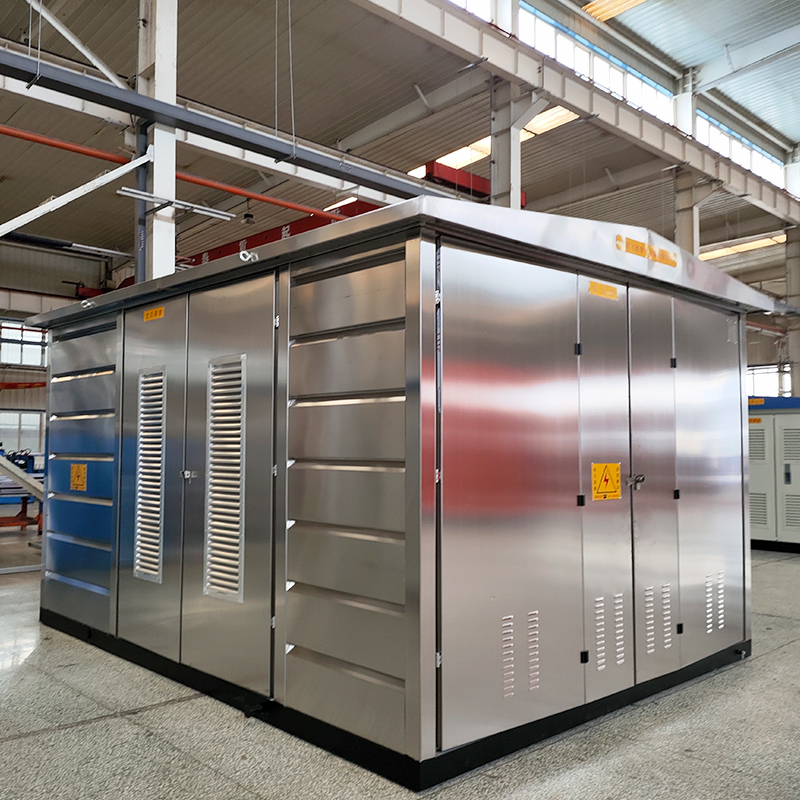
Key Urban Substation Design Constraints: Space, Safety, and Aesthetics
Overcoming spatial limitations in high-density environments
Space is always at a premium for urban substations, especially when land prices in big cities can hit over nine million dollars per acre according to recent data from the Urban Land Institute. Gas insulated switchgear cuts down on physical space needs by roughly two thirds compared to traditional air insulated systems, which makes it practically necessary for installing power infrastructure in densely packed areas. The modular approach allows engineers to stack transformers and other gear vertically instead of spreading them out horizontally. Prefabricated substation units speed things up considerably when working in tight spots like underground utility rooms or narrow backstreets between buildings. Smart positioning of all the equipment ensures there's enough room around everything for maintenance work while still keeping operations running smoothly day after day.
Ensuring safety through optimized earthing and step/touch voltage control
Proper earthing systems limit step/touch potentials below 5 V during faults, per IEEE 80-2013 standards. A layered approach combines:
- Deep-driven electrodes reaching low-resistivity soil layers
- Equipotential bonding of all metallic structures
- Crushed rock surfacing (0.15 m depth) to increase contact resistance
Continuous monitoring of ground grid integrity prevents corrosion failures—which cause 17% of substation outages (EPRI 2023). Integrated protection systems reduce arc-flash risks by 92% in enclosed urban installations, as confirmed in the 2024 Electrical Safety Report.
Meeting municipal requirements for visual integration and noise reduction
Cities mandate substation noise levels below 55 dB(A) at property lines, aligned with WHO guidelines. This is achieved through:
- Low-noise transformers (<65 dB) with sound-dampening enclosures
- Acoustic barriers using composite materials
- Strategic ventilation design to prevent resonance or noise amplification
Aesthetic integration includes green walls, architectural cladding matching surrounding buildings, and undergrounding of HV lines. Chicago’s Riverbank Substation exemplifies successful visual mitigation—its ventilation structures double as public art installations while maintaining N+1 redundancy.
GIS vs. AIS: Selecting the Optimal Substation Technology for Urban Sites
Why gas-insulated switchgear (GIS) dominates space-constrained substation design
Gas Insulated Switchgear really shines in those crowded city areas where real estate prices shoot past nine million dollars per acre. The compact design with those sealed SF6 chambers takes up about seventy percent less room compared to Air Insulated Switchgear, which matters a lot when substations need to fit into spaces that are only thirty percent the size of what was standard before. Another big plus? GIS doesn't get messed up by dust in the air or salt from nearby coasts, so failures happen around forty percent less often in places near factories or along shorelines. When it comes to maintenance, these systems can go over ten years between checkups three times longer than regular AIS equipment. That translates to roughly two point one million dollars saved over time even though the upfront cost runs twenty to thirty percent higher. Because of all this, most engineers reach for GIS first when designing power systems for major cities, subway hubs, and hospitals where reliability just can't be compromised.
Key GIS vs. AIS comparison for urban deployment
| Factor | GIS Technology | AIS Technology |
|---|---|---|
| Space Required | Up to 70% reduction | 3–5× larger footprint |
| Safety Level | Immune to pollution/salt | Vulnerable to contaminants |
| Maintenance | 10+ year intervals | Annual inspections |
| Best Fit | New urban construction | Expansions/retrofits |
When air-insulated switchgear (AIS) remains viable for urban retrofits
Air insulated switchgear still has real world applications when working on older city grids where the existing setup makes things easier to plug in. When looking at expanding those old substations that have been around for over 100 years especially in the 11 to 33 kV range, installing AIS equipment actually costs about 40 percent less compared to upgrading GIS systems according to recent studies from last year's grid modernization research. The fact that AIS sits outside means engineers can upgrade parts bit by bit without shutting everything down completely, which matters a lot in areas where power companies are only allowed short periods without electricity maybe just four hours at a time. Sure, GIS does better against harsh weather conditions, but AIS works fine enough in places where dust and dirt aren't constant problems as long as regular maintenance keeps things clean. And when setting up temporary power solutions while transitioning between different phases of work, the simpler design of AIS components lets crews get everything running again about two thirds quicker than what would be possible with GIS options.
Electrical and Thermal Layout Optimization for Urban Substations
Underground cable integration, EMI mitigation, and coordinated earthing
More and more urban power substations are turning to underground cabling these days because there's just not enough room for overhead lines anymore, plus nobody wants those ugly poles cluttering up cityscapes. But here's the catch – running all those cables underground can create serious problems with electromagnetic interference that messes up delicate control systems and communications equipment. To fix this issue, engineers need to install special shielded cables, make sure electrical phases are properly balanced when laid out, and keep data cables physically separated from power lines. Another absolutely critical aspect is getting the grounding right. All metal parts in the substation – think cable coverings, pipe networks, even the steel framework itself – should be connected together in one big grounding network. This setup helps safely channel away any dangerous electrical faults and meets those strict safety standards outlined in IEEE 80-2013 regarding touch and step voltages.
Thermal management strategies for enclosed or basement-mounted substation configurations
Thermal control is non-negotiable in space-constrained, enclosed, or below-grade substations—where heat buildup accelerates insulation degradation and shortens equipment life. Effective strategies include:
- Passive solutions: heat-absorbing wall linings, thermal mass integration, and optimized airflow paths via computational fluid dynamics (CFD) modeling
- Active cooling: forced-air systems for medium-voltage gear; liquid-cooled transformers for high-load zones
Proactive thermal monitoring—using embedded IoT sensors and AI-driven anomaly detection—prevents hotspots and extends asset life by up to 50% compared to unmanaged environments.
Future-Proofing Urban Substations: Scalability, Intelligence, and Renewable Readiness
City power grids need to keep pace with growing demands from electric vehicles, local energy production, and climate challenges. Modern substation designs now feature modular components that let utilities expand capacity gradually rather than building everything at once. This makes it easier to connect EV charging stations, small local power networks, or newly developed neighborhoods without major disruptions. Smart technology is being integrated too, with artificial intelligence and internet-connected sensors helping predict when equipment might fail, balance electricity loads in real time, and isolate problems quickly so outages don't last as long. For renewable energy sources like wind and solar, special configurations help handle their unpredictable nature while keeping voltages stable even when power flows back and forth across the grid. These adaptations ensure we waste less clean energy when there's an oversupply. When looking ahead, cities that invest in scalable infrastructure, smart monitoring systems, and flexibility for green energy will build stronger foundations for their electrical networks.
FAQ
What is the primary advantage of using gas-insulated switchgear (GIS) in urban substations?
GIS requires up to 70% less space than air-insulated switchgear (AIS), making it ideal for densely packed urban environments.
How do urban substations ensure safety?
By optimized earthing systems, equipotential bonding, and continuous monitoring to prevent failures, as well as using integrated protection systems to reduce arc-flash risks.
What strategies are used for thermal management in substations?
Strategies include passive solutions like thermal mass integration and active cooling systems, along with proactive thermal monitoring using IoT sensors.