EN
EN
 AR
AR
 BG
BG
 HR
HR
 CS
CS
 DA
DA
 FR
FR
 DE
DE
 EL
EL
 HI
HI
 PL
PL
 PT
PT
 RU
RU
 ES
ES
 CA
CA
 TL
TL
 ID
ID
 SR
SR
 SK
SK
 SL
SL
 UK
UK
 VI
VI
 ET
ET
 HU
HU
 TH
TH
 MS
MS
 SW
SW
 GA
GA
 CY
CY
 HY
HY
 AZ
AZ
 UR
UR
 BN
BN
 LO
LO
 MN
MN
 NE
NE
 MY
MY
 KK
KK
 UZ
UZ
 KY
KY


Voltage, Load, and Fault Performance Requirements for Renewable Switchgear
Aligning MV/HV Voltage Classes with Grid Interface Points and Project Scale
Choosing between medium voltage (MV: around 1 kV to 52 kV) and high voltage (HV: anything above 52 kV) really comes down to what the grid needs and how big the project is. Big solar installations usually hook up at about 34.5 kV, but smaller wind projects in communities tend to work fine with voltages between 12 and 15 kV. Getting this wrong can lead to problems like insulation breakdowns or wasted equipment capacity. For example, a massive 100 MW solar farm connecting to main transmission lines will need high voltage switchgear rated at least 36 kV. On the flip side, those little rooftop solar panels function just great with medium voltage equipment up to 15 kV. Most engineers refer to IEEE standard C37.20.2 when figuring out these compatibility issues across different renewable energy setups.
Sizing Current Ratings and Fault Withstand Capacity for Intermittent, Unbalanced Generation
Renewable generation introduces variable load profiles and asymmetric fault currents, demanding rigorous derating and robust fault tolerance. Switchgear must sustain:
- Continuous current: 125% of peak inverter output for solar; 130% of turbine maximum output for wind
- Short-circuit withstand: Minimum 40 kA for 3 seconds to manage surge events during grid disturbances
| Parameter | Solar Requirement | Wind Requirement |
|---|---|---|
| Rated Current | 1.25× inverter output | 1.3× turbine max output |
| Fault Current | 25–31.5 kA | 31.5–40 kA |
| Unbalance Tolerance | ±5% voltage deviation | ±7% voltage deviation |
Grid codes reinforce these demands: IEEE 1547 requires 150% transient overload capacity for PV systems, while wind applications need 200% cyclic load endurance to accommodate turbine inertia and gust-driven torque variations.
Application-Optimized Switchgear Types for Solar, Wind, and Storage Integration
Metal-Clad, GIS, and SF6-Free MV Switchgear for PV Farms and Wind Substations
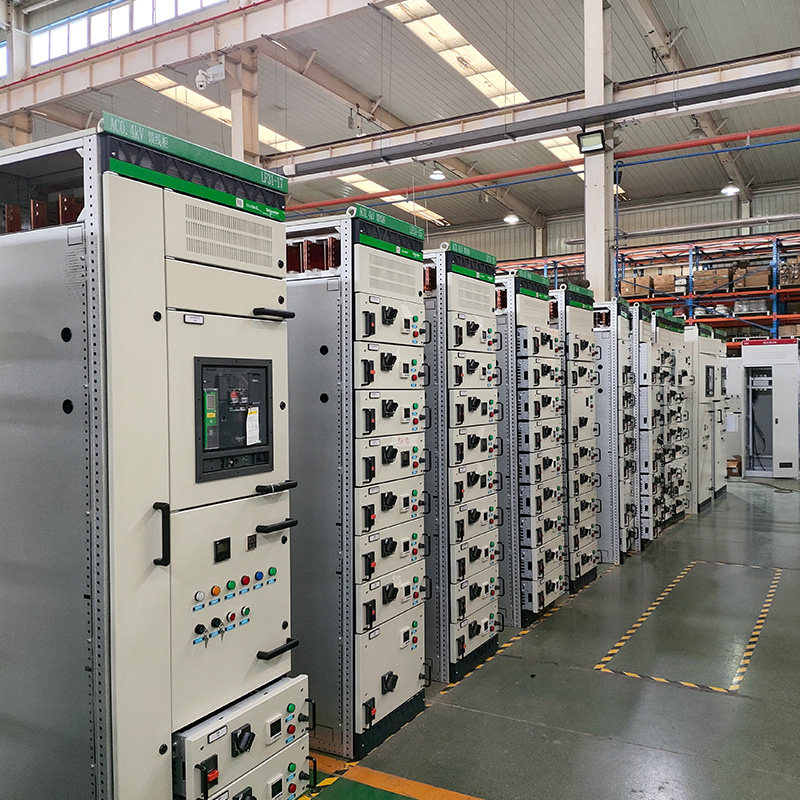
Large scale renewable energy projects need medium voltage switchgear that can be serviced easily, takes up less space, and stays safe in different environments. Most solar farms go with metal clad designs because they’re modular. The removable circuit breakers mean technicians can fix things without shutting down the whole substation, which saves time and money. For offshore wind installations or places where there's just not enough room, gas insulated switchgear (GIS) becomes the preferred choice. These systems cut down on physical space requirements by around two thirds compared to conventional options, plus they naturally resist corrosion from salt water exposure. As rules about emissions get stricter across the board, we’re seeing more adoption of SF6 free alternatives these days. Companies are turning to vacuum interruption technology combined with solid dielectric insulation materials instead of the old SF6 stuff. The newer gear works just as well as what came before but removes all those pesky greenhouse gas concerns that used to plague the industry.
DC and Hybrid AC/DC Switchgear for Battery Storage and Microgrid Applications
Battery Energy Storage Systems, or BESS for short, need specially designed DC switchgear because they face some pretty unique problems. Unlike AC systems, there’s no natural point where the current drops to zero, plus we get those fast discharge spikes that can damage equipment. That's why modern switchgear includes things like magnetic blowout coils and stronger arc chutes which can stop DC faults almost instantly, usually within a few milliseconds. When looking at hybrid AC/DC switchgear solutions, what makes them stand out is their ability to protect all components while switching between different power sources in a microgrid setup. Think about a system combining solar panels, batteries, and traditional backup generators - this kind of gear handles everything smoothly. Going native with DC coupling actually cuts down on energy loss during conversions and lets the system operate independently when the main grid goes down. This capability isn't just good practice, it's becoming essential for meeting regulations like UL 1741 SA and IEEE 1547-2018 standards, which are increasingly important as more facilities aim for energy independence.
Environmental Durability and Remote-Ready Design for Renewable Sites
Corrosion Resistance, IP65+ Enclosures, and Adaptive Thermal Management in Harsh Climates
Switchgear at renewable energy sites faces serious challenges from harsh conditions. Wind farms along coasts deal with salt spray corrosion, while solar installations in deserts battle sand abrasion and humidity levels that can hit over 90%. According to AMPP research from 2023, about one quarter of all electrical failures happen because of corrosion in these tough environments. To combat this, triple sealed IP66 enclosures stop dust and water from getting inside during intense weather events like monsoons or sandstorms. For even tougher situations, manufacturers turn to stainless steel 316L or nickel alloys which are certified under ISO 12944 C5-M standard for places with aggressive chemicals or marine exposure. Thermal management systems also play a key role here. They use PTC heaters and variable speed fans to keep equipment running smoothly through extreme temperature ranges from minus 40 degrees Celsius right up to plus 55. These systems help prevent dangerous flashovers caused by condensation when temperatures swing wildly overnight, something that has been tested and documented in IEC TR 63397:2022 standards.
| Environmental Threat | Switchgear Defense | Performance Benchmark |
|---|---|---|
| Salt/chemical corrosion | Stainless steel (316L) or nickel alloys | ISO 12944 C5-M certification |
| Dust/sand ingress | IP66-rated seals & gaskets | Tested at 100g/m³ dust density |
| Thermal cycling stress | Active heating/cooling systems | Stable operation at ±50°C swings |
Digital Readiness: Smart Switchgear for Monitoring, Automation, and Grid Compliance
IEC 61850 Integration, SCADA Protocols (Modbus/DNP3), and Edge-Based Diagnostics
Switchgear plays a vital role in modern renewable systems, acting as something much more than just a simple disconnect point. When equipment supports native IEC 61850 standards, it allows different brands of protection relays, sensors, and controllers to work together seamlessly. This makes setup easier and speeds up the process of verifying grid codes. Most systems today also connect with SCADA platforms through protocols like Modbus TCP and DNP3. These connections let operators monitor and control everything remotely while keeping data secure throughout the network. The smart processors built right into these devices can check current levels, voltage readings, temperature changes, and even spot partial discharges locally. They catch problems in less than 20 milliseconds which matters a lot when responding quickly to islanding events. Advanced predictive maintenance tools look at how components have performed over time to predict when parts might fail. According to Energy Grid Insights from 2023, this approach cuts unexpected downtime almost in half. And there's more too adaptive protection logic keeps things stable by changing settings automatically when renewable sources fluctuate. This helps maintain compliance with requirements around low voltage ride through and harmonic distortion limits without manual intervention.
FAQ
What voltage levels are typical for renewable energy switchgear?
Medium voltage (MV) typically ranges from 1 kV to 52 kV and is commonly used for smaller systems, while high voltage (HV) is above 52 kV and is usually required for large-scale installations.
How does switchgear support battery energy storage systems?
DC switchgear used in Battery Energy Storage Systems handle unique challenges like fast discharge spikes by incorporating features like magnetic blowout coils and arc chutes to quickly address faults.
What are SF6-free alternatives in switchgear?
Recent trends are moving towards vacuum interruption technology with solid dielectric insulation materials, eliminating the need for the greenhouse gas SF6 while maintaining similar performance.
How do environmental conditions affect switchgear at renewable sites?
Switchgear at renewable sites can face issues from salt spray corrosion, sand abrasion, and temperature extremes. Solutions include using robust enclosures and adaptive thermal management systems to ensure durability.
Table of Contents
- Voltage, Load, and Fault Performance Requirements for Renewable Switchgear
- Application-Optimized Switchgear Types for Solar, Wind, and Storage Integration
- Environmental Durability and Remote-Ready Design for Renewable Sites
- Digital Readiness: Smart Switchgear for Monitoring, Automation, and Grid Compliance
- FAQ