EN
EN
 AR
AR
 BG
BG
 HR
HR
 CS
CS
 DA
DA
 FR
FR
 DE
DE
 EL
EL
 HI
HI
 PL
PL
 PT
PT
 RU
RU
 ES
ES
 CA
CA
 TL
TL
 ID
ID
 SR
SR
 SK
SK
 SL
SL
 UK
UK
 VI
VI
 ET
ET
 HU
HU
 TH
TH
 MS
MS
 SW
SW
 GA
GA
 CY
CY
 HY
HY
 AZ
AZ
 UR
UR
 BN
BN
 LO
LO
 MN
MN
 NE
NE
 MY
MY
 KK
KK
 UZ
UZ
 KY
KY


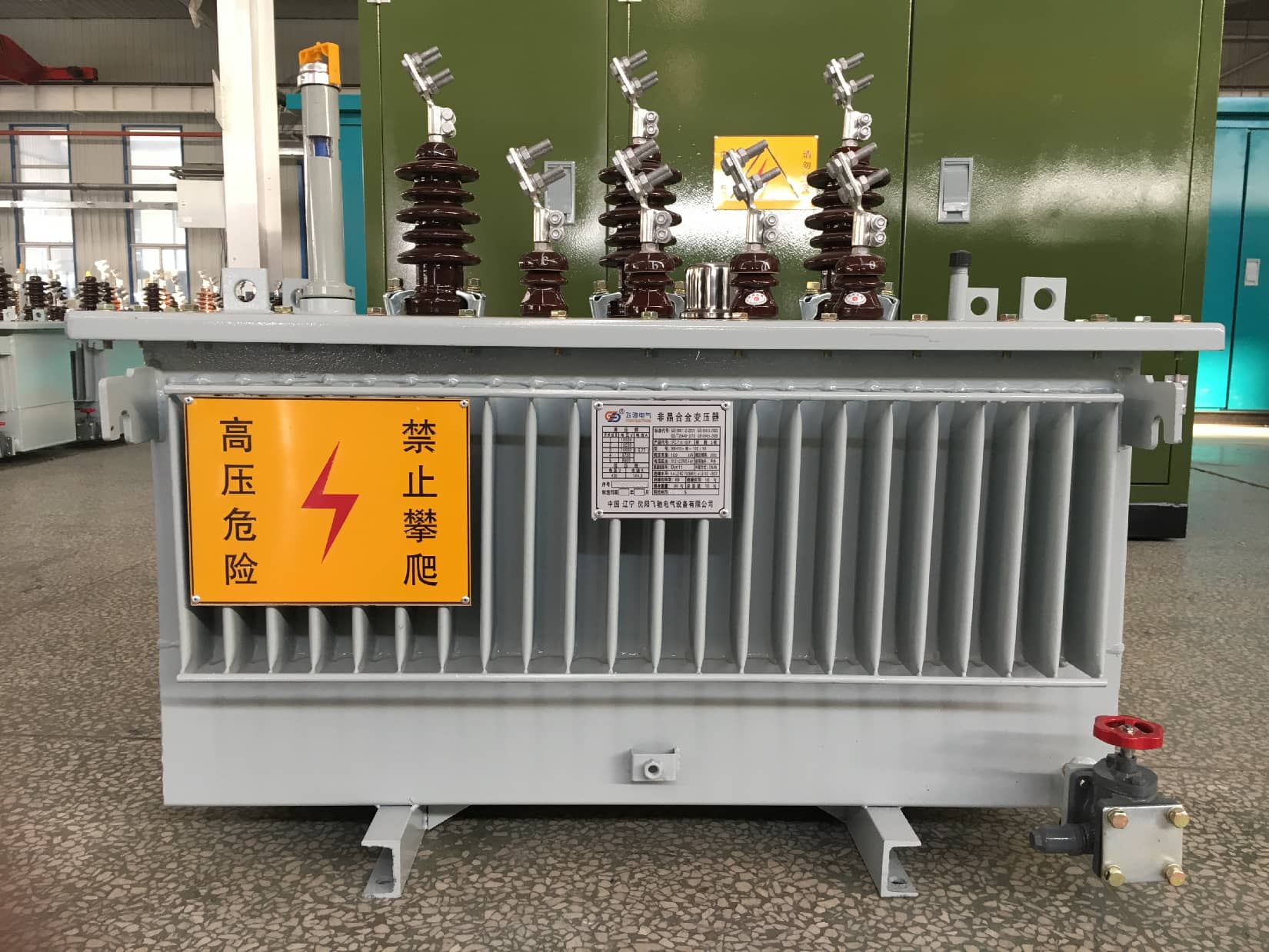
Site and Space Requirements for 10kV Indoor Transformer Installation
Minimum clearances, room dimensions, and zoning per IEC 60076 and IEEE C57.12.00
Adhering to IEC 60076 and IEEE C57.12.00 is essential for safe, code-compliant 10kV indoor transformer installations. These standards define minimum clearances to prevent electrical hazards, ensure thermal management, and allow safe maintenance access:
- Front/Rear: 1.5–3 m for cable routing, operational safety, and breaker access
- Sides: 1–1.5 m from walls to support ventilation and mitigate arc-flash risk
- Overhead: 1.8–2.5 m from ceiling to bushings—critical for personnel safety and thermal plume clearance
When planning space for transformers, remember they need room for their actual size plus all those required clearances around them. Transformers over 500 kVA usually demand special attention too. Most local regulations want fire rated walls at least two hours strong and separate walkways for maintenance access. The NEC and IEC standards aren't exactly twins when it comes to how they handle grounding issues or what counts as safe distance. But despite these differences, both ultimately aim for worker safety. These varying approaches show different ways of thinking about electrical safety that should really be sorted out before any serious design work begins on the project.
Dry-type vs. oil-immersed transformer footprint, fire separation, and ventilation zoning implications
Dry-type transformers offer significant spatial advantages: ~30% smaller footprint than equivalent oil-immersed units and no liquid containment requirements. However, their installation remains tightly governed—especially by NFPA 70 (NEC) Article 450.21 for indoor use:
- Fire Separation: Oil-filled units mandate sumps sized to hold 110% of total oil volume (per IEEE C57.12.00-2023) and fire-resistive barriers between units or adjacent spaces
- Ventilation Zoning: Dry-types may be installed with as little as 0.3 m clearance from non-combustible surfaces and integrated into general HVAC zones; oil units require dedicated exhaust ducts vented outdoors or to a mechanical room with explosion relief
- Footprint Optimization: Dry-types permit tighter stacking (1 m lateral separation), whereas oil units require ≥2.5 m spacing to limit fire propagation risk under fault conditions
Selection should weigh not only space savings but also lifecycle risk profile—dry-types eliminate spill and flammability concerns but demand stricter ambient temperature control and dust mitigation.
Thermal Management and Ventilation for Indoor Transformer Operation
Cooling method selection: natural convection, forced-air, and ducting requirements
Cooling method directly impacts transformer longevity, efficiency, and spatial integration. Natural convection (ONAN) suits smaller units (<2,500 kVA) in well-ventilated rooms with stable ambient conditions. Forced-air cooling (ONAF) becomes necessary for higher loads or confined spaces—and requires purpose-built ductwork:
- Duct cross-sections must provide 150–200% of radiator surface area to maintain ≥2 m/s airflow velocity
- Duct runs should avoid sharp bends, elbows, or obstructions that induce turbulence or pressure drop
- Radiators require ≥1 m unobstructed clearance on all sides and must be isolated from heat-generating equipment (e.g., UPS systems, switchgear) to prevent hot-air recirculation
Thermal modeling during design—using tools validated against IEC 60076-7—ensures cooling capacity matches worst-case load profiles and ambient extremes.
Temperature rise limits (e.g., 115K for Class H) and ambient derating guidelines
The lifespan of transformer insulation really depends on sticking to those temperature limits. Most dry-type transformers use Class H insulation which allows for about 115 degrees Kelvin increase from the base ambient temperature of 40 degrees Celsius. When these limits get exceeded, things start breaking down faster than normal. According to what's known as the Arrhenius rule, if temperatures go 8 to 10 degrees above what they should be, the insulation degrades twice as fast. Transformers need to be derated when operating in hotter environments too. For every degree Celsius above 40 degrees, there's a 0.4% drop in capacity. Take a 1,000 kVA transformer for instance it can only put out around 960 kVA when the surrounding air hits 45 degrees. Keeping everything running at full power requires good ventilation systems that maintain ambient temperatures below 40 degrees and keep relative humidity under 60%. This helps prevent moisture from getting absorbed into the solid insulation material and stops those annoying partial discharges from starting up.
Electrical Safety and Grounding for 10kV Transformer Systems
Low-impedance grounding design to comply with IEEE 80 and limit touch/step voltage
A low-impedance grounding system is foundational—not optional—for personnel safety and equipment protection. Designed per IEEE 80 and IEC 61936, it safely dissipates fault current while limiting hazardous voltage gradients across accessible surfaces. Key performance targets include:
- Ground grid resistance ≤5 Ω (industry best practice for indoor substations)
- Use of #2 AWG copper or larger conductors to handle prospective fault currents
- Bonding of transformer tank, neutral point, surge arresters, and metallic enclosures to establish an equipotential zone
The IEEE 80 standard sets out requirements for grid geometry, including things like conductor depth which should generally be at least 600 mm, proper spacing between components, and vertical electrode placement that goes down around 2.4 meters or more. These specifications help keep those dangerous step and touch potentials under control, ideally bringing them below the 100 volt threshold. Ground resistance tests need to happen every year because nobody notices when soil conditions change or corrosion starts eating away at connections until something goes wrong. Take data centers for instance where safety matters most. When grounding systems meet code requirements, they cut down on arc flash incidents significantly. Industry benchmarks from 2024 show these compliant systems can actually reduce injury risks by about half compared to non-compliant setups.
Mechanical Installation: Foundation, Stability, and Vibration Control
Concrete pad specifications, seismic anchoring, and anti-vibration mounting best practices
When installing indoor 10kV transformers, we're dealing with dynamic loads that require special foundation work beyond regular floor surfaces. For concrete pads, the rule of thumb is at least 200mm thickness with steel mesh reinforcement throughout. Proper curing according to ASTM C31 standards ensures the concrete reaches around 30 MPa strength or better. Transformers located in earthquake-prone areas need anchor bolts meeting IEEE C57.12.00 specifications for depth and torque requirements. These should be combined with base isolation mounts that help separate the equipment from horizontal shaking forces during tremors. To tackle vibrations, most installations use rubber-like pads under the transformer base. Field tests show these pads cut down on resonance transmission by about 70% compared to traditional rigid mounts according to research published in PGP Journal last year. The connection between vibration control and seismic anchoring matters a lot too. If bolts aren't tightened correctly or pads get compressed improperly, both systems fail simultaneously. That's why experienced technicians always perform final checks with field modal testing to ensure the natural frequencies don't clash with the transformer's operating sounds like the typical 120 Hz hum from cores running at full capacity.
Commissioning, Testing, and Regulatory Compliance Verification
Thorough commissioning and testing are non-negotiable for ensuring the safety and reliability of 10kV indoor transformer installations—and serve as the primary evidence of regulatory compliance. This process begins before energization and extends through comprehensive electrical and mechanical validation.
Pre-commissioning inspection: nameplate verification, visual integrity, and moisture checks
Before turning anything on, we need to make sure everything is physically ready to go. Techs should check the nameplate info first looking at things like voltage ratios, impedance levels, vector groups, and cooling classes against what was approved during design. A good visual inspection covers bushings for cracks or wear, confirms terminals are properly torqued down, checks if gaskets are still sealed tight, and looks for any damage from shipping or handling. One really important thing though is measuring moisture levels in paper-based insulation materials. Using tests like frequency domain spectroscopy or polarization decay current gives us those readings. If we find moisture above 1.5%, we have to dry out the system because too much water in there can cut the lifespan of the insulation nearly in half according to Doble Engineering research from last year. And remember, all these test results need to meet the requirements laid out in industry standards such as IEEE C57.12.90 and IEC 60076-3 when evaluating whether equipment passes quality control.
Critical electrical tests: insulation resistance, turns ratio, winding resistance, and SFRA
Post-inspection, standardized electrical tests confirm functional integrity:
- Insulation Resistance (IR): Measured using a 5 kV megohmmeter; results corrected for temperature and compared to baseline or IEEE 902 thresholds to detect contamination or moisture ingress
- Turns Ratio (TTR): Verifies voltage transformation accuracy within ±0.5% of nameplate value—flagging tap changer misalignment or winding faults
- Winding Resistance: Detects loose connections or asymmetrical winding paths using DC micro-ohm meters; deviations >2% between phases warrant investigation
- Sweep Frequency Response Analysis (SFRA): Establishes a mechanical “fingerprint” by comparing amplitude-phase responses across 1 kHz–2 MHz; shifts >3 dB indicate core movement, winding deformation, or clamping failure
Collectively, these tests satisfy NEC Article 450.6, OSHA 1910.303, and insurer-mandated commissioning protocols—documenting due diligence before first energization.
FAQ
What are the clearance requirements for installing a 10kV indoor transformer?
Ensuring adequate clearances is critical for safety and maintenance. Front and rear spaces should be between 1.5 to 3 meters, sides should be between 1 to 1.5 meters, and overhead clearances should be between 1.8 to 2.5 meters.
What are the key differences between dry-type and oil-immersed transformers?
Dry-type transformers have a smaller footprint, with ~30% less space required compared to oil-immersed units. They require integrated HVAC zones, while oil units need dedicated exhaust ducts. Additionally, oil units must have fire separators and sumps for oil containment.
How do cooling methods impact transformer installations?
Choosing the correct cooling method, such as natural convection or forced-air, affects the transformer's efficiency and longevity. Proper ducting and ventilation are crucial, and thermal modeling can help match cooling needs to load requirements.
What is involved in the pre-commissioning inspection process?
Pre-commissioning involves verifying nameplate information, performing visual checks for physical integrity, and testing moisture levels in insulation materials. If moisture exceeds guidelines, drying is required to prevent insulation degradation.
Table of Contents
- Site and Space Requirements for 10kV Indoor Transformer Installation
- Thermal Management and Ventilation for Indoor Transformer Operation
- Electrical Safety and Grounding for 10kV Transformer Systems
- Mechanical Installation: Foundation, Stability, and Vibration Control
- Commissioning, Testing, and Regulatory Compliance Verification
- FAQ