EN
EN
 AR
AR
 BG
BG
 HR
HR
 CS
CS
 DA
DA
 FR
FR
 DE
DE
 EL
EL
 HI
HI
 PL
PL
 PT
PT
 RU
RU
 ES
ES
 CA
CA
 TL
TL
 ID
ID
 SR
SR
 SK
SK
 SL
SL
 UK
UK
 VI
VI
 ET
ET
 HU
HU
 TH
TH
 MS
MS
 SW
SW
 GA
GA
 CY
CY
 HY
HY
 AZ
AZ
 UR
UR
 BN
BN
 LO
LO
 MN
MN
 NE
NE
 MY
MY
 KK
KK
 UZ
UZ
 KY
KY


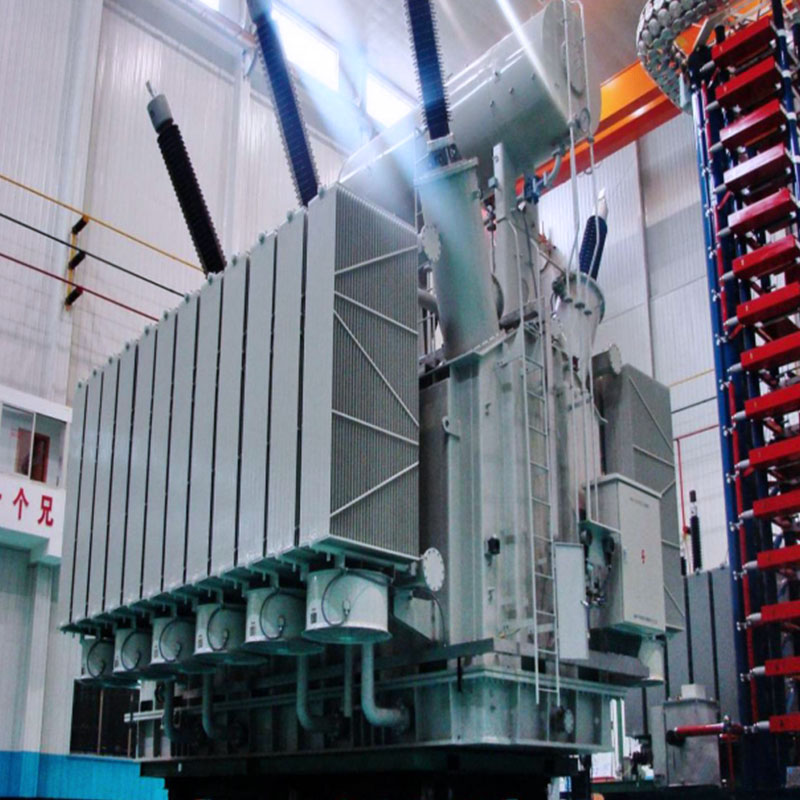
Understanding Transformer Loss Types: Core vs. Load Losses
No-load (core) losses: hysteresis, eddy current, and iron loss mechanisms
No-load losses occur whenever the transformer is energized—regardless of load—and stem entirely from core excitation. These constant losses consist of:
- Hysteresis loss: Energy dissipated as heat during cyclic magnetization and demagnetization of the core material.
- Eddy current loss: Resistive heating from circulating currents induced in the core laminations, proportional to the square of flux frequency and lamination thickness.
Together, they constitute 20–40% of total energy loss in typical power transformers (Ponemon 2023). Unlike load losses, core losses remain stable across varying load conditions but increase significantly with voltage surges or harmonic distortion—and are highly sensitive to core material quality.
Load (copper) losses: I²R heating, skin effect, and proximity effect dependencies
Load losses scale quadratically with current (I²R) and dominate at higher loads—accounting for 60–80% of total losses. Primary contributors include:
- Resistive (Joule) heating: Direct conversion of electrical energy to heat in winding conductors.
- Skin effect: AC current crowding near conductor surfaces, raising effective resistance—especially above 50 Hz.
- Proximity effect: Distorted current distribution caused by magnetic fields from adjacent conductors, further increasing AC resistance.
These effects intensify under harmonic-rich loads, accelerating temperature rise and insulation aging. Mitigation relies on optimized conductor geometry, advanced stranding techniques, and robust thermal management—not just raw conductor size.
| Loss Type | Dependency | Typical Share | Primary Control Methods |
|---|---|---|---|
| Core Losses | Voltage/frequency | 20–40% | Advanced steel grades, reduced flux density |
| Copper Losses | Load current (I²) | 60–80% | Conductor sizing, stranding, cooling systems |
Core Loss Reduction Strategies for High-Efficiency Transformers
Advanced core materials: grain-oriented silicon steel vs. amorphous metal trade-offs
Grain oriented electrical steel or GOES is still what most industries go with because of how its grains are aligned in one direction. This alignment cuts down on hysteresis loss by about 30% compared to regular non oriented steel. Then there's amorphous metal alloys that really take efficiency to another level. These materials can cut core losses anywhere from 65 to maybe even 70 percent. Why? Because at the atomic level they're all messed up and this random arrangement naturally stops those pesky eddy currents from forming. But here's the catch with amorphous cores: they need special treatment during manufacturing, must be handled with care, and come with extra packaging requirements. All this adds around 15 to 25% to the price tag. Still worth it though when looking at the big picture. For equipment that runs constantly, the money saved on energy over time usually pays back the initial investment within 5 to 8 years. That makes these materials pretty attractive for power companies focused on keeping grids efficient over the long haul.
Flux density optimization and Bmax derating to balance saturation and loss
Running magnetic materials at flux densities below their maximum usable level (Bmax) leads to significant drops in hysteresis losses because these losses don't scale linearly with B. For instance, reducing operation by about 10% from typical saturation points around 1.7 to 1.8 Tesla can slash no load losses anywhere between 20 and 25 percent. This comes at the expense of needing roughly 15% more core material in cross section area, but it works out economically across the transformer's 30 year lifespan, especially when we consider how well regulated voltages remain. Another thing engineers need to watch out for are those pesky grid harmonics and frequency fluctuations that might actually create local saturation spots in certain areas of the core. These issues can completely wipe out any advantages gained from running lower than normal flux levels unless properly addressed during design phase.
Copper Loss Mitigation Through Winding Design and Operational Tuning
Conductor selection, stranding, and geometry optimization to minimize resistance and AC losses
Copper with high conductivity is still the best bet for windings because it cuts down on basic DC resistance. When dealing with those pesky AC losses, engineers often go with transposed or Litz wire arrangements. These help spread out the current evenly across the conductor's cross section, which fights against skin effect and proximity issues. Another trick up the sleeve involves interleaving or sandwiching windings together. This setup brings down leakage reactance and shortens the average turn length. As a result, stray losses drop somewhere between 10 and 15 percent in really efficient designs. What makes all this worthwhile? These methods maintain the structural strength of components while actually making a difference in reducing heat buildup and those annoying hot spots that can cause problems down the line.
Thermal management and load profile alignment to sustain optimal current density
The winding resistance goes up around 3 to 4 percent when temperature climbs 10 degrees Celsius. That means good cooling isn't just nice to have it's absolutely necessary if we want to keep those copper losses down. Different cooling methods work best depending on the setup forced air works fine for some installations, others need oil immersion or directed oil cooling to keep conductor temps stable and stop resistance from spiraling out of control. Getting the operational balance right matters too much. Transformers running constantly under 30% capacity waste power because core losses take over. But pushing them beyond their limits all the time wears out the insulation faster than anyone wants. Smart operators combine real time load monitoring with regular maintenance checks so they can adjust loads dynamically and cut back when needed. Keeping current density between 1.5 and 2.5 amps per square millimeter as suggested by IEEE standards ensures everything runs efficiently without breaking down prematurely.
System-Level Best Practices for Transformer Energy Loss Reduction
Right-sizing transformers to match actual load profiles and avoid underloading penalties
Transformer oversizing continues to be a frequent problem that costs money unnecessarily. When these devices run underloaded, they're operating way below their best performance levels since peak efficiency usually happens between 50 and 75 percent loading. Core losses can account for around 30% of all energy used even when there's little output happening. Standards such as DOE TP1 and IEC 60076 20 set certain efficiency requirements at loads ranging from 35 to 50%, but plenty of facilities continue to size based on what theory suggests instead of actual load measurements over time. Power companies who switch to data driven approaches find real improvements though. Those using detailed meter readings every 15 minutes plus looking at how demand changes seasonally typically see reductions in losses across the whole system somewhere between 12 and 18%. Plus this method helps them avoid spending extra cash on unnecessary equipment capacity.
Power factor correction and harmonic mitigation to reduce effective copper losses
Power factor issues cause transformers to handle extra reactive current, leading to I squared R losses that can jump anywhere from 15 to 40 percent in systems where correction isn't properly implemented. To keep power factors above 0.95 and cut down on conductor heating, it makes sense to install capacitor banks close to those big inductive loads, preferably ones that switch automatically based on demand. At the same time, either passive or active harmonic filters tackle those pesky fifth and seventh order harmonics that mess with voltage waveforms and create unwanted eddy currents within transformer cores. Combine these approaches for real results: copper losses drop between 8 and 12 percent overall, while insulation lasts longer too since the equipment runs cooler and steadier under normal operating conditions.
FAQ
What are transformer core losses?
Transformer core losses occur due to the energy dissipated in magnetizing the core, primarily through hysteresis and eddy current losses. They are constant losses that happen when the transformer is energized.
How can transformer core losses be reduced?
Core losses can be reduced by using advanced core materials like grain-oriented silicon steel or amorphous metal alloys, and by optimizing flux density below maximum levels.
What are transformer load losses?
Load losses in transformers result from I²R heating, skin effect, and proximity effect, which intensify as load currents increase, accounting for the majority of total losses during high loads.
How can transformer load losses be minimized?
Minimizing load losses involves using high-conductivity copper windings, employing advanced winding techniques like interleaving, and ensuring effective thermal management to maintain optimal current density and reduce resistance and AC losses.
What role does power factor play in transformer efficiency?
Power factor affects transformer efficiency by increasing reactive current, leading to higher I²R losses. Improving power factor through correction methods can reduce these losses and improve overall efficiency.