EN
EN
 AR
AR
 BG
BG
 HR
HR
 CS
CS
 DA
DA
 FR
FR
 DE
DE
 EL
EL
 HI
HI
 PL
PL
 PT
PT
 RU
RU
 ES
ES
 CA
CA
 TL
TL
 ID
ID
 SR
SR
 SK
SK
 SL
SL
 UK
UK
 VI
VI
 ET
ET
 HU
HU
 TH
TH
 MS
MS
 SW
SW
 GA
GA
 CY
CY
 HY
HY
 AZ
AZ
 UR
UR
 BN
BN
 LO
LO
 MN
MN
 NE
NE
 MY
MY
 KK
KK
 UZ
UZ
 KY
KY


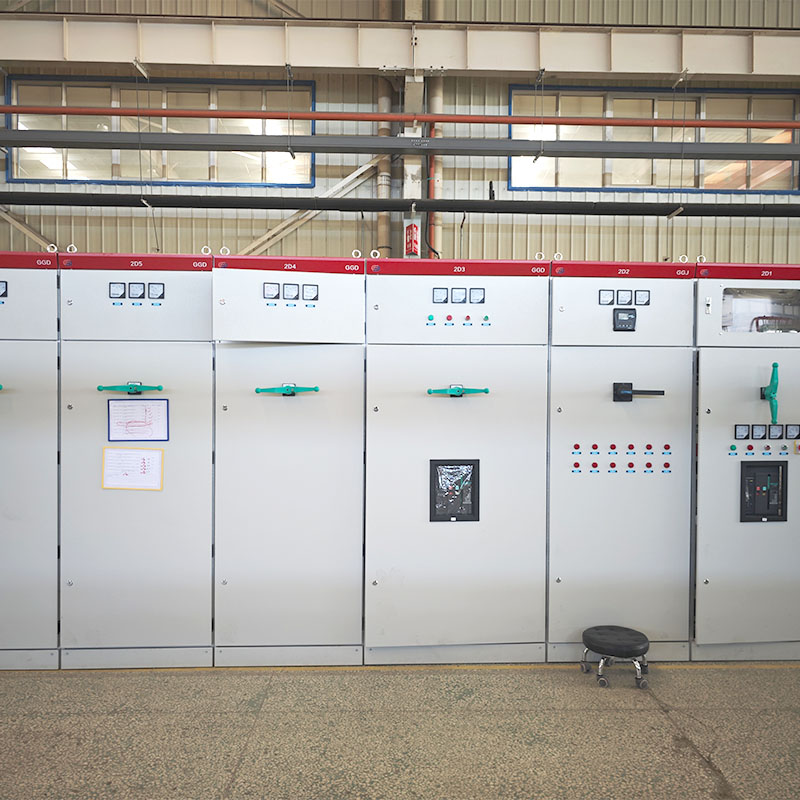
Determine Load and Fault-Level Requirements for Switchgear Sizing
Load profiling, diversity factor application, and voltage class alignment
Getting accurate load profiles is essential when choosing switchgear because it involves looking at everything connected to the system including equipment, lighting setups, HVAC units, and those tricky non-linear loads. Diversity factors usually range between 0.6 and 0.8 in industrial settings and help create a more realistic picture of what the actual simultaneous demand will be instead of going by theoretical max values. Take a manufacturing facility as an example - if it has around 500 kW worth of connected loads, after factoring in something like a 0.7 diversity factor, the actual required capacity drops down to about 350 kW. The voltage rating needs to match exactly what the distribution system operates on, whether that's standard 400 volts or the higher 690 volts option. Mismatched voltages cause problems, and according to industry reports from 2023, this accounts for roughly one quarter of early switchgear failures. Don't forget to build in some extra capacity too, somewhere between 20% and 30%, so there's room for expansion down the road without having to completely overhaul the existing setup later on.
Fault-level calculation per IEC 60909 and SCCR validation against upstream source impedance
Calculating fault levels according to IEC 60909 standards helps figure out those prospective short circuit currents, which are essential when determining what size equipment can handle interruption and withstand forces. Most industrial low voltage systems deal with fault currents ranging from about 25 thousand amps all the way up to 65 thousand amps. To get started on calculating the initial symmetrical short circuit current, engineers often use this standard formula: Ik equals c times Un divided by the square root of three multiplied by Zk. Here's what each part means: c represents the voltage factor, usually set at 1.05 for maximum fault scenarios. Un stands for the system's nominal voltage, while Zk covers everything upstream including transformer percentage impedance, cable resistance and reactance, plus whatever comes from busbars. Take a typical 1000 kVA transformer rated at 400 volts with 5% impedance, and we're looking at roughly 36 thousand amps. Safety margins matter though - switchgear needs to have a Short Circuit Current Rating (SCCR) that's at least 25% higher than this calculated value. Industry experience shows this buffer prevents disasters during faults. When checking protection coordination, always cross reference time current curves between devices both upstream and downstream to maintain selectivity and stop multiple breakers from tripping unnecessarily. Remember that arc flash accidents aren't just dangerous but also costly, averaging around $740,000 per incident according to Ponemon Institute research from 2023. That makes thorough SCCR validation absolutely necessary for any serious electrical installation.
| Validation Parameter | Calculation Method | Industry Benchmark |
|---|---|---|
| Prospective Fault Current | IEC 60909 Annex B | 25–65 kA |
| SCCR Safety Margin | (SCCR / Calculated Ik) × 100 | ≥125% |
| Upstream Impedance | Transformer %Z + Cable Resistance | <0.05 Ω for LV systems |
Match Switchgear Architecture to Distribution System Hierarchy
Functional roles: main intake, busbar sectionalizing, feeder distribution, and MCC integration
Getting the components right in a tiered electrical distribution system really matters because everything needs to work together properly. The main intake panels connect straight to transformers or come from utility feeders. Then there are those busbar sectionalizing units which help isolate specific zones when maintenance is needed or during faults. Feeder distribution switchgear sends power out to local load centers throughout the facility. Motor control centers, often called MCCs, handle all the protection, control functions, and monitoring for motors in one place. When things aren't aligned correctly, problems happen fast. For instance, if trip settings don't match between main and feeder breakers, it can cause big issues with power going out across multiple areas and mess up how different parts of the system coordinate during faults. Every level of this setup shouldn't just focus on handling enough current but also needs clear roles in how the whole system operates together.
Application-driven selection: motor control, reactive power compensation, and sub-distribution loads
The design of switchgear systems needs to match what they're actually going to be used for. When dealing with motors that run constantly, we need MCC integrated setups with special breakers that can handle those big startup surges and keep working through multiple start-stop cycles. For power factor correction with capacitor banks, the right approach involves fused switches that meet IEC 61439-3 standards, plus some extra thermal protection when there are lots of harmonics in the system. Panels feeding critical IT equipment need special attention too. These installations should focus on fault isolation features so problems get contained before they cause downtime. The numbers tell an interesting story here: according to recent data from the 2023 Arc Flash Incident Report, around three out of four electrical failures come down to improper switchgear setup rather than faulty components themselves.
Ensure Protection Coordination and Compliance with IEC Standards
Selectivity between breakers and fuses using time-current curves (IEC 60947-2/6)
Selectivity basically means getting those downstream protection devices to handle faults before the ones upstream kick in, and this all comes down to doing thorough TCC analysis work. According to standards like IEC 60947-2/6, we need to check circuit breakers and fuses against three main things: how well they can stop current flow, limit energy release, and coordinate properly across different current levels. When systems are properly coordinated, they cut down on dangerous arc flash incidents by around 40 percent compared to setups that aren't coordinated according to IEEE 1584-2022 research. Plus, this approach lets engineers isolate problems right where they occur instead of causing bigger issues elsewhere. A critical detail many miss during system retrofits is ensuring that whatever time it takes for a downstream device to clear a fault stays under what it would take for an upstream fuse to melt at each possible fault current level. This tiny but crucial aspect gets forgotten surprisingly often in practice.
Internal separation (IEC 61439-2 Types 1–4) and IP rating selection for environmental safety
The concept of internal separation according to IEC 61439-2 basically tells us how different parts like busbars, cables, and terminals need to be separated so arcs don't spread and workers stay safe when something goes wrong inside equipment. There are different levels here too. Type 1 just gives some basic separation between components while Type 4 takes things much further with complete segregation including those grounded metal barriers between all the important bits. This higher level makes sense especially where reliability matters most or fault currents could be really dangerous. When it comes to IP ratings, they have to fit what kind of environment the equipment will face. General industrial areas usually need at least IP54 protection against dust and water splashes. For indoor substations where there's not much risk, IP31 might work fine. But coastal installations or places with corrosive elements demand IP66 enclosures made from stainless steel instead of regular carbon steel. Studies show these stainless steel options reduce failures by around 78% compared to standard materials according to NEMA VE 1-2020 data. And remember, whatever separation method and protection level we choose should always comply with local safety regulations like NFPA 70E requirements.
Validate Mechanical and Electrical Design for Long-Term Switchgear Reliability
Validating mechanical robustness and electrical integrity ensures decades of safe, uninterrupted operation. This hinges on three interdependent verification pillars:
- Structural resilience: Enclosure materials and construction must sustain environmental stresses—including corrosion, UV degradation, and mechanical impact—while maintaining at minimum IP54 ingress protection
- Electrical endurance: Critical components must demonstrate ≥10,000 mechanical operations in accelerated lifecycle testing, with thermal performance validated under site-specific ambient temperatures and loading profiles
- Certification compliance: Third-party certification to IEC 62271-200 (dielectric strength) and IEC 61439 (short-circuit withstand, verified via UL 1066 testing) reduces field failure rates by 72% (2025 Energy Infrastructure Report). Manufacturers providing auditable test reports—not just declarations—deliver proven reliability across 30+ year service lifetimes, significantly lowering total cost of ownership and mitigating safety risk.
FAQ
What is the significance of accurate load profiling for switchgear sizing?
Accurate load profiling helps in identifying the true demand of connected loads, allowing for better sizing of switchgear. This avoids overestimation and ensures the system can handle actual demand without wasting resources.
How does SCCR validation help in switchgear setup?
SCCR validation ensures that the switchgear can handle short circuit current levels safely, preventing catastrophic failures during fault conditions. It involves calculating the safety margin above calculated fault levels.
What are the roles of functional switchgear in distribution systems?
Functional switchgear roles include main intake, busbar sectionalizing, feeder distribution, and MCC integration. Each plays a crucial part in maintaining proper power distribution and system stability.
Why is protection coordination important in electrical systems?
Protection coordination ensures that faults are isolated at the correct level, preventing widespread disruptions and minimizing arc flash risks. Selectivity between protection devices facilitates this coordination.
What is the purpose of internal separation in switchgear?
Internal separation prevents arc propagation within switchgear, enhancing safety by isolating different components. This is dictated by IEC 61439-2 standards, with various types offering levels of segregation.
Table of Contents
- Determine Load and Fault-Level Requirements for Switchgear Sizing
- Match Switchgear Architecture to Distribution System Hierarchy
- Ensure Protection Coordination and Compliance with IEC Standards
- Validate Mechanical and Electrical Design for Long-Term Switchgear Reliability
-
FAQ
- What is the significance of accurate load profiling for switchgear sizing?
- How does SCCR validation help in switchgear setup?
- What are the roles of functional switchgear in distribution systems?
- Why is protection coordination important in electrical systems?
- What is the purpose of internal separation in switchgear?