EN
EN
 AR
AR
 BG
BG
 HR
HR
 CS
CS
 DA
DA
 FR
FR
 DE
DE
 EL
EL
 HI
HI
 PL
PL
 PT
PT
 RU
RU
 ES
ES
 CA
CA
 TL
TL
 ID
ID
 SR
SR
 SK
SK
 SL
SL
 UK
UK
 VI
VI
 ET
ET
 HU
HU
 TH
TH
 MS
MS
 SW
SW
 GA
GA
 CY
CY
 HY
HY
 AZ
AZ
 UR
UR
 BN
BN
 LO
LO
 MN
MN
 NE
NE
 MY
MY
 KK
KK
 UZ
UZ
 KY
KY


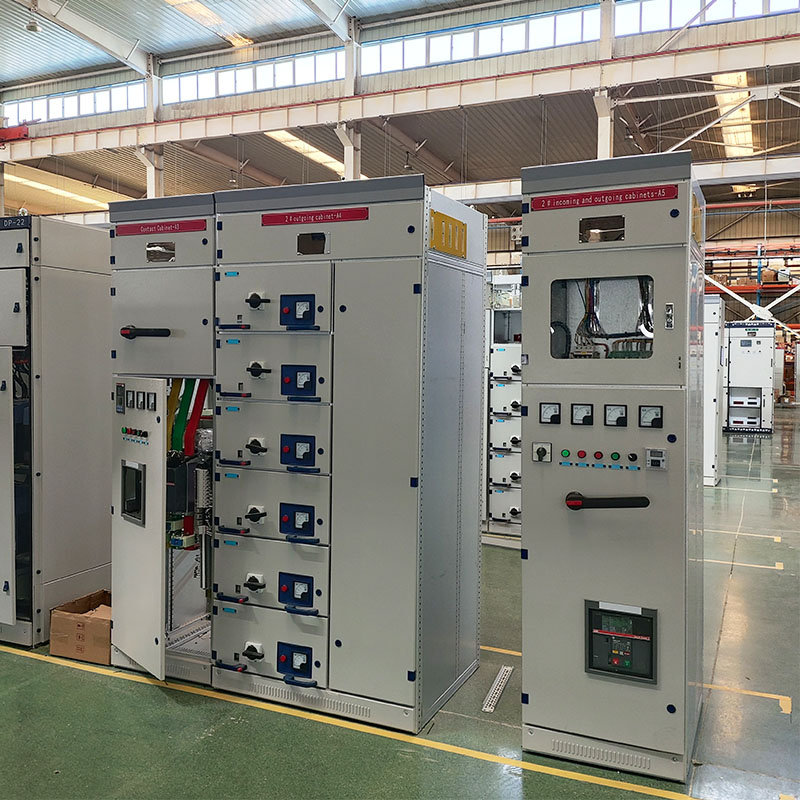
Electrical Integrity: Short-Circuit Withstand and Arc-Resistant Performance
Short-Circuit Current Rating (SCCR) and Real-World Fault-Current Handling
Manufacturers validate switchgear reliability through rigorous short-circuit testing per IEC 62271-1 and ANSI/IEEE C37.04. Key benchmarks include:
- Peak withstand current: Maximum instantaneous surge tolerance—typically 2.5× RMS short-circuit value—measured during the first half-cycle of a fault.
- Short-time withstand current: Confirmed capacity to carry fault current for up to 3 seconds without structural or thermal failure, verified via calorimetric and mechanical stress analysis.
- Duration rating: Defined safe operational time under fault conditions, aligned with IEEE C37.04 timing requirements.
Modern switchgear achieves SCCR exceeding 100 kA using optimized busbar geometry, reinforced enclosures, and advanced current-limiting strategies—essential in industrial settings where available fault currents can reach 740 kA (Ponemon Institute, 2023).
Arc Flash Mitigation Strategies and IEEE 1584–Compliant Validation
Arc-resistant switchgear reduces incident energy below 1.2 cal/cm² by containing and redirecting arc blast energy. Core design elements include:
- Pressure-relief ducts: Channel explosive gases upward through dedicated plenums
- Current-limiting fuses: Interrupt arcs in under 8 ms, limiting energy release
- Zone-selective interlocking relays: Cut clearing times by up to 30% versus conventional coordination
Validated per IEEE 1584–2018 test protocols, these systems demonstrate <1% probability of arc propagation beyond the enclosure. Third-party certification to NFPA 70E ensures personnel safety thresholds are met—contributing to an 85% reduction in electrical injuries across facilities using certified arc-resistant gear (ESFI, 2022).
Condition Monitoring: Partial Discharge and Thermal Health Indicators
Partial Discharge Patterns as Predictive Markers for Insulation Failure
Partial Discharge (PD) activity is a definitive early indicator of insulation degradation. When localized electrical stress exceeds dielectric tolerance—due to voids, contamination, or aging—micro-discharges emit distinct electromagnetic and acoustic signatures. Advanced PD diagnostics detect and classify these patterns to identify:
- Weaknesses in solid or gas-insulated components
- Defects in bushings, cable terminations, or splices
- Accelerated deterioration from voltage transients or harmonic distortion
Unmitigated PD erodes insulation exponentially; studies show unchecked activity can reduce service life by more than 60%. Continuous monitoring correlates discharge magnitude, repetition rate, and phase-resolved behavior with failure probability—enabling precise, risk-based interventions before arc-flash hazards develop.
Infrared and Fiber-Optic Thermal Monitoring for Early Overheating Detection
Thermal anomalies often precede catastrophic failure. Infrared thermography identifies surface-level hotspots caused by:
- Loose or corroded connections increasing contact resistance
- Overloaded conductors operating beyond thermal design limits
- Developing insulation faults generating localized heating
When infrared access isn't possible for internal parts, fiber optic temperature sensors come into play. They offer EMI immune readings in real time right inside active equipment compartments. What makes these sensors so valuable? They spot unusual heat patterns long before things get dangerous. Think about contact points wearing down or busbar connections starting to fail - these issues show up on the sensors way before temperatures reach those critical levels set by IEEE 1584 standards for arc flash safety. When combined with partial discharge analysis tools, having both sensor types creates a powerful early warning system. This combination gives maintenance teams a much clearer picture of how insulation materials are holding up and what condition conductors actually are in day to day operations.
Mechanical and Operational Reliability of Critical Switchgear Components
Circuit Breaker Tripping Consistency, Contact Erosion Metrics, and Lifecycle Data
Circuit breakers form the backbone of electrical system protection, and how reliable they are mechanically makes all the difference for safety and ongoing operation. When it comes to tripping consistency, engineers look at response time differences during those standard IEEE C37.04 fault tests. This helps stop big power failures from spreading because the breaker interrupts faults in a predictable way every time. For contact erosion assessment, technicians measure both micrometer profiles and actual weight loss after each interrupt cycle. Once the contacts lose more than 30% of their original thickness, that's usually when performance starts to really decline. Most field experience shows this threshold marks the point where replacement becomes necessary rather than just maintenance.
Lifecycle data—including cumulative operations, environmental exposure (e.g., humidity, dust), and trip history—feeds predictive maintenance models. Field data shows facilities performing routine mechanical verification achieve 40% lower unplanned downtime, confirming that disciplined tracking of these parameters extends switchgear service life while mitigating risks from delayed or failed operation.
Insulation and Dielectric Integrity in SF6 and Eco-Friendly Switchgear
SF6 Gas Purity, Leakage Rate, and Dielectric Strength Correlation
SF6 continues to be popular in medium voltage switchgear because it has excellent dielectric properties, about three times better than regular air at normal pressure levels. The catch? This stuff doesn't take contamination very well. When moisture content hits around 100 ppm or worse, or if there's more than 0.5% annual gas loss, the insulation gets compromised by roughly 30%. That means increased chances of dangerous arc flashes and problems with how the system recovers after interrupting current flow. To keep things running safely, technicians need to run infrared spectroscopy tests every quarter. These check both gas density and look for harmful breakdown products like sulfur dioxide and hydrogen fluoride. This monitoring helps determine when the SF6 needs cleaning or replacement to maintain proper insulation performance.
Emerging Alternatives: GWP-Reduced Gases and Their Performance Benchmarks
The push from regulators is really speeding things up when it comes to finding alternatives to SF6, which has a global warming potential (GWP) of 23,500 CO₂ equivalents. That's way too high compared to what we need these days. Fluoronitrile based gases are showing promise here. They can handle electricity just as well as SF6 does but cut down on GWP by nearly 99%. Some companies have gone for vacuum interruption tech paired with dry air insulation instead. This approach gives us completely zero GWP operations, although there's a catch. The equipment needs about 20% more space because the dielectric properties aren't quite as strong. Most of these alternative solutions get tested by independent labs following standards like IEC 62271-203. Tests show they hold up against 25 kA short circuits just fine, similar to old school SF6 gear. When looking at how good these options actually are, engineers now consider not just how stable they are electrically but also what happens to them over their whole life cycle from production to disposal.
Standards Compliance and Maintenance Practices That Drive Long-Term Switchgear Reliability
Following international standards like IEC 62271-200 and IEEE C37.20.2 really makes a difference when it comes to how reliable equipment stays over time. According to the Energy Infrastructure Report from 2023, gear that meets these standards sees about 72% fewer problems when faults happen. For those looking at extending equipment lifespan, predictive maintenance techniques such as thermal imaging scans, checking contact resistance levels, and monitoring partial discharges can push service life past 30 years while stopping nearly 9 out of 10 unexpected shutdowns, per the EPRI Maintenance Benchmark Study released in 2024. These kinds of regular checks become second nature once implemented properly across facilities.
- Environmental controls: Maintaining ambient humidity below 60% and particulate levels compliant with ISO 14644 Class 8
- Dielectric validation: Annual power factor and insulation resistance testing
- Mechanical cycling: Functional verification of operating mechanisms every 5,000 operations
Facilities aligning fully with NFPA 70B-2023 maintenance frequencies realize 40% lower lifecycle costs—driven by optimized replacement scheduling, reduced emergency labor, and minimized collateral damage from deferred interventions.
FAQs
What are the main benefits of arc-resistant switchgear?
Arc-resistant switchgear reduces incident energy and enhances safety by containing and redirecting arc blasts, following standards like IEEE 1584 for validation and reducing the probability of arc propagation beyond the enclosure.
Why is partial discharge monitoring critical in electrical maintenance?
Partial discharge monitoring helps detect insulation degradation early, preventing catastrophic failures by identifying weaknesses in components and enabling timely risk-based interventions.
How do eco-friendly switchgear alternatives compare to traditional SF6 systems?
Eco-friendly alternatives like fluoronitrile gases and vacuum interruptions reduce global warming potential and provide comparable electrical stability, although they may require more space due to lower dielectric strength.
Table of Contents
- Electrical Integrity: Short-Circuit Withstand and Arc-Resistant Performance
- Condition Monitoring: Partial Discharge and Thermal Health Indicators
- Mechanical and Operational Reliability of Critical Switchgear Components
- Insulation and Dielectric Integrity in SF6 and Eco-Friendly Switchgear
- Standards Compliance and Maintenance Practices That Drive Long-Term Switchgear Reliability
- FAQs